
Early Tick Season is Here: Tick Checks & Disease Prevention

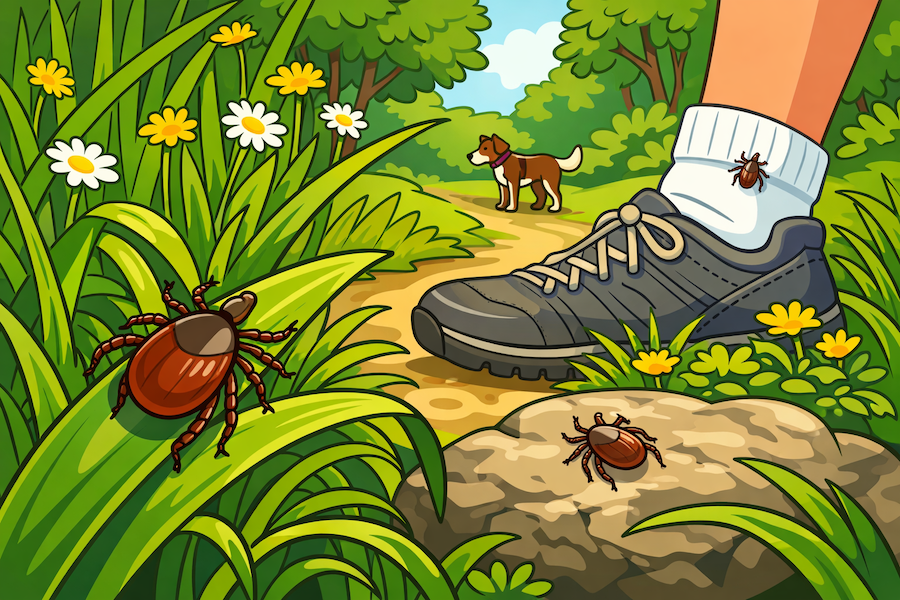
As the weather begins to warm up, more of us are heading outside to walk the dog, work in the yard, hike local trails, visit parks, and enjoy spring sports and activities. It is also the time of year to start thinking seriously about ticks. Ticks live in grassy, brushy, and wooded areas, and many people encounter them close to home, including in their own yards and neighborhoods. In Connecticut, recent statewide surveillance found blacklegged ticks remained consistently abundant, with more than 10,000 ticks collected across all eight counties in 2025.

Ticks can spread several illnesses, not just Lyme disease. In the United States, ticks can transmit germs that cause Lyme disease, anaplasmosis, babesiosis, Powassan virus disease, ehrlichiosis, Rocky Mountain spotted fever, and other infections. In Connecticut, public health officials specifically note that blacklegged ticks can spread Lyme disease, anaplasmosis, babesiosis, Borrelia miyamotoi disease, and Powassan virus disease.

Lyme disease remains the tick-borne illness people hear about most often, and for good reason. The CDC reports that more than 89,000 Lyme disease cases were reported nationally in 2023, while other CDC estimates suggest roughly 476,000 people in the U.S. may be diagnosed and treated for Lyme disease each year. Lyme disease is most common in the Northeast, mid-Atlantic, and upper Midwest.

In Connecticut, tick prevention is especially important because local surveillance continues to show elevated pathogen levels in blacklegged ticks. In the 2025 Connecticut Agricultural Experiment Station surveillance report, 55% of adult blacklegged ticks and 25% of nymphs tested positive for the bacterium that causes Lyme disease. The same report also found blacklegged ticks carrying babesiosis and anaplasmosis pathogens, with Powassan virus detected at low levels in adult ticks.

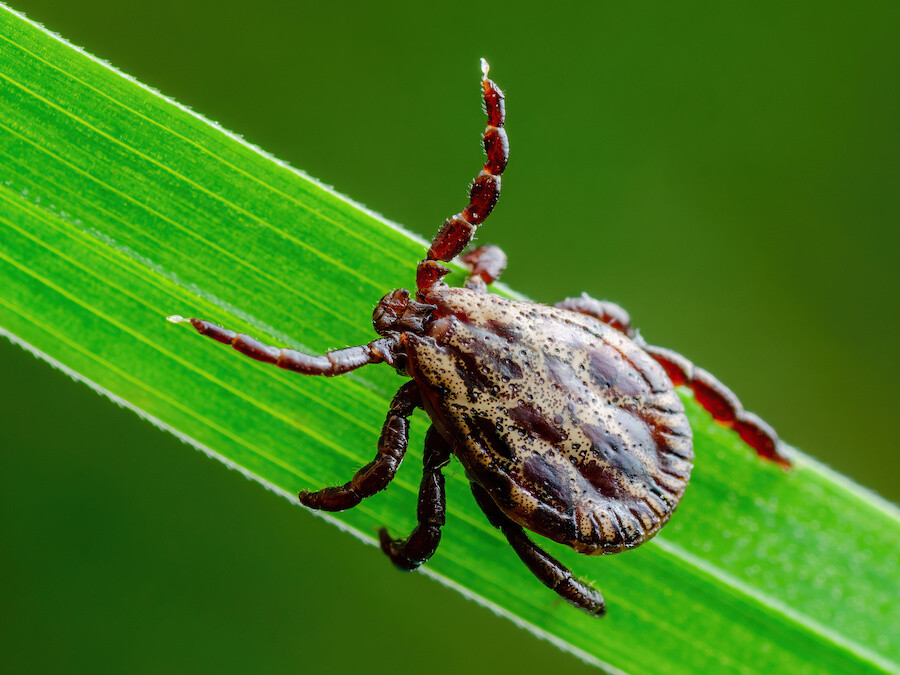
One reason early-season awareness is so important is that immature ticks, called nymphs, are very small and easy to miss. The Connecticut DPH notes that nymphs are about the size of a poppy seed, and that most Lyme disease infections occur during May through July when nymphs are actively searching for a meal. Ticks do not jump or fly; they are usually picked up from grasses and overgrown areas and often start on the lower legs before crawling upward.

How to Prevent Tick Bites

The good news is that a few simple steps can significantly reduce your risk.

Wear the right clothing when you expect to be in tick habitat. Long pants, long sleeves, closed shoes, and light-colored clothing can help you spot ticks more easily. In brushy or wooded areas, tuck pant legs into socks and stay toward the center of trails.

Use an EPA-registered insect repellent on exposed skin and clothing as directed. EPA lists active ingredients including DEET, picaridin, IR3535, oil of lemon eucalyptus, p-menthane-3,8-diol, and 2-undecanone. The CDC recommends treating clothing and gear with products containing 0.5% permethrin or purchasing permethrin-treated items.

When you come back inside, do not skip the follow-up steps. The CDC recommends showering within 2 hours of coming indoors, checking your body for ticks, and tumble-drying clothes on high heat for 10 minutes to help kill ticks.

How to Do a Tick Check

A tick check should become part of your routine after time outdoors, especially after yard work, hiking, gardening, or playing in grassy areas.

Check your entire body carefully, paying close attention to:

  • under the arms
  • behind the knees
  • in and around the ears
  • in the hair and along the scalp
  • inside the belly button
  • around the waist
  • between the legs and in the groin area

Ticks can be tiny, so use a mirror or ask for help checking hard-to-see places. Be sure to check children and pets, too.

What to Do If You Find a Tick

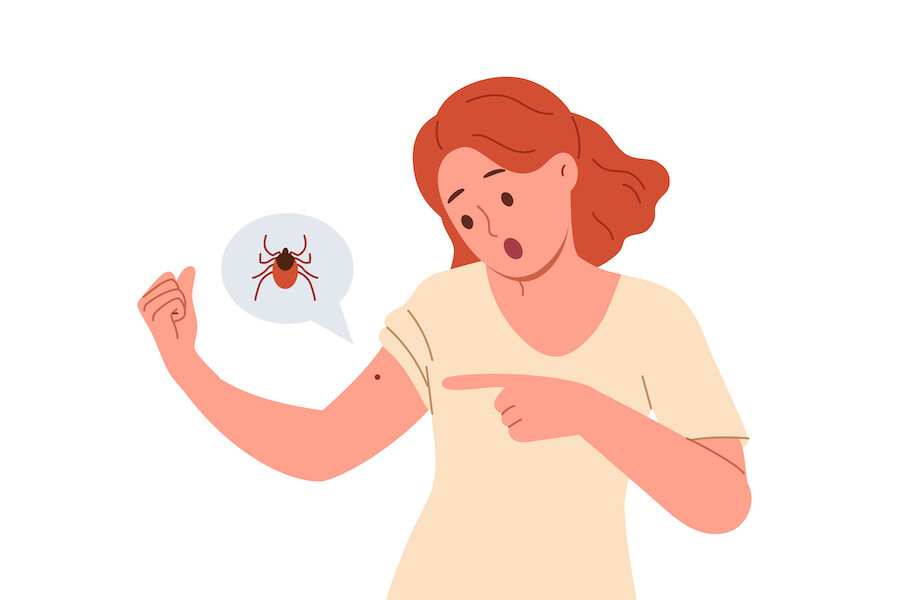
If you find a tick attached to your skin, remove it as soon as possible. Use clean, fine-tipped tweezers to grasp the tick as close to the skin’s surface as possible, then pull upward with steady, even pressure. Do not twist or jerk the tick. After removal, clean the bite area and your hands with soap and water, rubbing alcohol, or hand sanitizer. Do not use petroleum jelly, nail polish, or heat to try to make the tick detach.

Prompt removal matters. Connecticut DPH notes that for Lyme disease, nymphal and adult female ticks generally need to feed for more than 24 hours before bacteria are transmitted. Removing ticks promptly reduces the risk of infection.

When to Call a Healthcare Provider

After a tick bite, keep an eye out for symptoms over the next several days to weeks. Common warning signs of tickborne illness include fever, chills, headache, fatigue, muscle aches, joint pain, and rash. For Lyme disease, the CDC says the classic erythema migrans rash occurs in about 70% to 80% of infected people, though it does not always look like a bull’s-eye. Seek medical care if you develop a rash or fever after a tick bite, and tell your provider when the bite happened and where you were exposed.

A little prevention can go a long way. As outdoor season begins, taking a few extra minutes to protect yourself, do a tick check, and remove ticks promptly can help you and your family enjoy spring and summer more safely.

Eastern CT Sees Surge in Tick Activity — Stay Safe and Prevent Tick-Borne Illnesses

sign warning of ticks in the area

As we move into mid‑May in Eastern Connecticut, tick activity is rising. With warm, mild conditions replacing a short winter, our local environment has become prime real estate for ticks at every life stage. According to experts at the Connecticut Agricultural Experiment Station (CAES), including Dr. Goudarz Molaei, this year’s unusually mild winter and early snow melt have triggered an earlier and potentially more active tick season in our region.

Ticks thrive in grassy, brushy, and wooded areas where hosts like deer, rodents, and even household pets are often found. Outdoor enthusiasts, gardeners, and pet owners should be aware that ticks are no longer confined to late spring and summer. Still, they can be encountered year‑round, especially in seasons following warmer winters.

How to Prevent Tick Bites

Reducing exposure to ticks is the cornerstone of tick‑borne disease prevention. The CDC recommends several key steps to keep you and your family safe when spending time outdoors:

  • Know where ticks live. Avoid wooded and brushy areas with high grass and leaf litter.

  • Dress for defense. Wear long sleeves, long pants tucked into socks, and light‑colored clothing to spot ticks easily.

  • Use EPA‑registered repellents. Apply repellents containing DEET, picaridin, or Oil of Lemon Eucalyptus on exposed skin, and treat clothing and gear with permethrin (0.5%).

  • Walk smart. Stay on cleared trails and walk in the center to reduce contact with vegetation.

  • Create a tick‑safe yard. Remove leaf litter, clear tall grasses around your home, and consider a wood chip barrier to deter tick migration into recreational areas.

What to Do If You Find a Tick

Despite your best efforts, ticks can still find their way onto your body. If you discover an attached tick:

  1. Remove it promptly. Use clean, fine‑tipped tweezers to grasp the tick as close to the skin’s surface as possible and pull upward with steady, even pressure—no twisting or jerking.

  2. Dispose safely. Place the tick in a sealed container, wrap it tightly in tape, or submerge it in alcohol. Avoid crushing it with your fingers.

  3. Clean the bite area. Wash the site and your hands thoroughly with soap and water or rubbing alcohol.

  4. Monitor and save evidence. Keep an eye on the bite site, and consider saving the tick in a sealed container for identification if symptoms develop CDC.

Conduct Regular Tick Checks

After outdoor activities, perform a full‑body tick check. Key places to inspect include:

  • Under arms

  • In and around ears

  • Inside the belly button

  • Back of knees

  • In and around the hairline

  • Between legs

  • Around the waist

Showering within two hours of being outdoors can wash off unattached ticks and is an ideal time for a thorough check.

Symptoms to Watch For

Early detection of tick‑borne illnesses is crucial. Recognizing the warning signs can prompt timely medical attention.

  • Lyme Disease: Fever, headache, fatigue, muscle and joint aches, swollen lymph nodes, and the hallmark erythema migrans (“bull’s‑eye”) rash appearing 3–30 days post‑bite. Later signs can include facial paralysis, severe headaches, heart palpitations, and arthritis.

  • Babesiosis: Flu‑like symptoms—fever, chills, sweats, headache, body aches, loss of appetite, nausea, and fatigue—and in severe cases hemolytic anemia and jaundice.

  • Anaplasmosis: Fever, headache, malaise, and muscle aches, typically beginning 5–14 days after a tick bite. Severe illness can develop, especially in older or immunocompromised individual.

  • Powassan Virus: Initial symptoms include fever, headache, vomiting, and weakness. Severe neuroinvasive disease may cause encephalitis or meningitis, with confusion, loss of coordination, and seizures—and transmission can occur in as little as 15 minutes of attachment.

If you develop a rash or fever within days to weeks of a tick bite, seek medical care promptly. Inform your healthcare provider of the tick exposure, when it occurred, and where you likely acquired it.

More from the Uncas Health District

Tick Bite Bot: Interactive Tool Kit for Tick Bites Now on Uncas HD Website

woman with tick bite

We are excited to announce a new feature on the Uncas Health District website — a cutting-edge interactive tick bite management tool provided by the Centers for Disease Control and Prevention (CDC). This tool is designed to help you assess tick bites and provide clear, step-by-step instructions for safely removing ticks and taking appropriate actions afterward.

Ticks can be a serious health concern, potentially transmitting diseases such as Lyme disease and anaplasmosis. With the CDC’s interactive tool, you can quickly evaluate any tick bite you or a loved one may experience. The tool will guide you through the process of identifying the type of tick, understanding the potential risks, and following the recommended procedures for removal.

Once the tick is removed, the tool will also offer crucial information on what to do next, including monitoring for symptoms of tick-borne illnesses and seeking medical attention if necessary. This ensures that you are well-informed and prepared to take the appropriate steps to protect your health.

Take Me to the Tick Bite Bot

DPH confirms 4 cases of tick-transmitted Powassan virus in CT this year

tick on a blade of grass

The Connecticut Department of Public Health (DPH) this week announced that four Connecticut residents have tested positive for Powassan virus (POWV) infection. These four cases of POWV associated illness are the first to be identified in Connecticut in 2023.  During 2016–2022, 19 cases of POWV associated illness were reported in Connecticut, including six in 2022; two of the infections were fatal last year.

Two male patients aged 60 years and older, residents of Middlesex County and Litchfield County, became ill during early July. Two female patients aged 50 years and older, residents of Windham and Litchfield County, became ill during late July. Laboratory tests performed at the Centers for Disease Control and Prevention (CDC) Laboratory in Ft. Collins, CO, confirmed the presence of antibodies to POWV for all patients. All patients reported a known tick bite and were hospitalized with a central nervous system disease. They have been discharged and are recovering.

“The identification of four Connecticut residents with Powassan virus-associated illness emphasizes the importance of taking actions to protect yourself from tick bites from now through the late fall,”; said DPH Commissioner Manisha Juthani, MD. “Using insect repellent, avoiding areas where ticks are likely, and checking carefully for ticks after being outside can reduce the chance of you or your children being infected with this virus.”

According to Goudarz Molaei, PhD, MSc, a chief scientist who also directs the Connecticut Tick and Tick-borne Pathogen Surveillance Program at the Agricultural Experiment Station, “In recent years we have been receiving a higher than usual number of ticks, and this year so far, the laboratory has received 4,616 tick submissions, including 3,089 blacklegged ticks, from state residents directly or through health departments and physicians’ offices, in comparison to 1,889 blacklegged ticks in 2022.”

“The persistent and expanding threat posed by blacklegged ticks, coupled with ongoing range expansion and establishment in new areas of invasive ticks, the Asian long horned tick, the Gulf Coast tick, and the lone star tick, and the confirmation of four Powassan virus disease cases in Connecticut residents, highlights the increasing public health challenges associated with ticks and tick-borne diseases.” said Dr. Molaei.

Powassan virus is spread to people through the bite of an infected blacklegged, or deer tick. It takes from one week to one month after the bite of an infected tick to develop symptoms of POWV disease, and the virus can be transmitted in as little as 15 minutes after the tick first attaches. Powassan virus associated illness has been reported from early spring until late fall.

While most people infected with POWV likely experience no symptoms or a mild flu-like illness, some people will develop severe illness affecting the central nervous system. About one out of 10 cases of severe illness are fatal and approximately half of survivors experience long-term health problems. Severe cases may begin with fever, vomiting, headache, or weakness and rapidly progress to confusion, loss of coordination, difficulty speaking, or seizures. There is no vaccine nor a specific treatment for POWV associated illness. Severe illness is treated by supportive therapy which may include hospitalization, respiratory support, and hydration.

Tips for preventing tick bites

  • Avoid areas where ticks are likely to be, such as in in grassy, brushy, or wooded areas. Ticks are active from
    spring to fall and may also be active on warmer days during winter.
  • Consider the use of CDC-recommended mosquito/tick repellents, containing DEET, picaridin, oil of lemon
    eucalyptus, IR3535, or 2-undecanone, and apply according to directions, when outdoors. However, repellents
    containing >30% DEET have been reported to be the most effective.
  • Check yourself, your children, and your pet animals for ticks immediately after coming indoors. Showering
    within two hours of coming indoors may be effective in reducing the risk of tick-borne disease.
  • Examine clothing and gear carefully after coming indoors. Tumble dry clothing in a dryer on high heat for at
    least 10 minutes to kill ticks that were carried inside.
  • Talk to your veterinarian about the best tick prevention products for your dog.
  • Consider treating items such as boots, clothing, and hiking or camping gear with products containing 0.5
    percent permethrin.

For information on Powassan virus and how to prevent tick bites, visit https://www.cdc.gov/powassan/index.html

Find more tips on tick removal and testing here.