
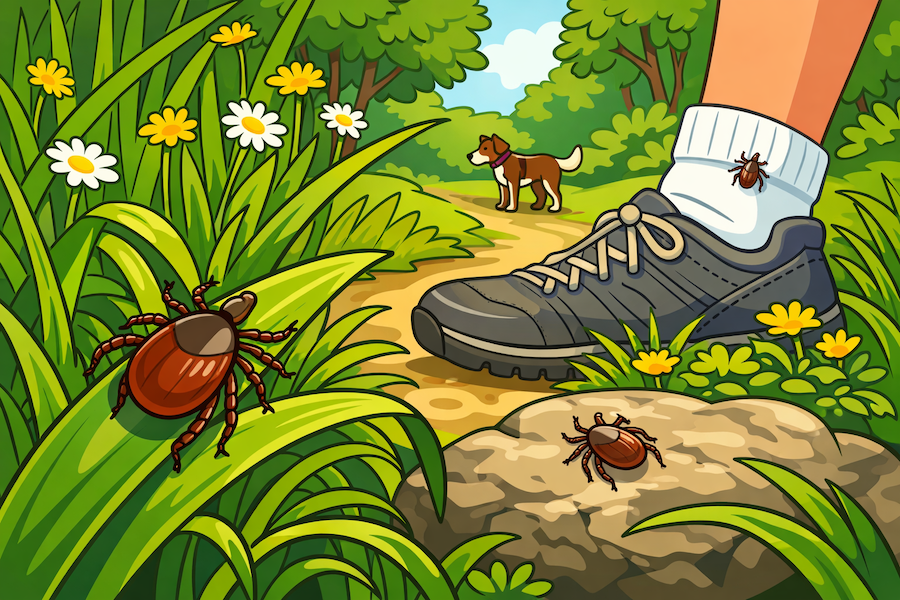
Early Tick Season is Here: Tick Checks & Disease Prevention

As the weather begins to warm up, more of us are heading outside to walk the dog, work in the yard, hike local trails, visit parks, and enjoy spring sports and activities. It is also the time of year to start thinking seriously about ticks. Ticks live in grassy, brushy, and wooded areas, and many people encounter them close to home, including in their own yards and neighborhoods. In Connecticut, recent statewide surveillance found blacklegged ticks remained consistently abundant, with more than 10,000 ticks collected across all eight counties in 2025.

Ticks can spread several illnesses, not just Lyme disease. In the United States, ticks can transmit germs that cause Lyme disease, anaplasmosis, babesiosis, Powassan virus disease, ehrlichiosis, Rocky Mountain spotted fever, and other infections. In Connecticut, public health officials specifically note that blacklegged ticks can spread Lyme disease, anaplasmosis, babesiosis, Borrelia miyamotoi disease, and Powassan virus disease.

Lyme disease remains the tick-borne illness people hear about most often, and for good reason. The CDC reports that more than 89,000 Lyme disease cases were reported nationally in 2023, while other CDC estimates suggest roughly 476,000 people in the U.S. may be diagnosed and treated for Lyme disease each year. Lyme disease is most common in the Northeast, mid-Atlantic, and upper Midwest.

In Connecticut, tick prevention is especially important because local surveillance continues to show elevated pathogen levels in blacklegged ticks. In the 2025 Connecticut Agricultural Experiment Station surveillance report, 55% of adult blacklegged ticks and 25% of nymphs tested positive for the bacterium that causes Lyme disease. The same report also found blacklegged ticks carrying babesiosis and anaplasmosis pathogens, with Powassan virus detected at low levels in adult ticks.

One reason early-season awareness is so important is that immature ticks, called nymphs, are very small and easy to miss. The Connecticut DPH notes that nymphs are about the size of a poppy seed, and that most Lyme disease infections occur during May through July when nymphs are actively searching for a meal. Ticks do not jump or fly; they are usually picked up from grasses and overgrown areas and often start on the lower legs before crawling upward.

How to Prevent Tick Bites

The good news is that a few simple steps can significantly reduce your risk.

Wear the right clothing when you expect to be in tick habitat. Long pants, long sleeves, closed shoes, and light-colored clothing can help you spot ticks more easily. In brushy or wooded areas, tuck pant legs into socks and stay toward the center of trails.

Use an EPA-registered insect repellent on exposed skin and clothing as directed. EPA lists active ingredients including DEET, picaridin, IR3535, oil of lemon eucalyptus, p-menthane-3,8-diol, and 2-undecanone. The CDC recommends treating clothing and gear with products containing 0.5% permethrin or purchasing permethrin-treated items.

When you come back inside, do not skip the follow-up steps. The CDC recommends showering within 2 hours of coming indoors, checking your body for ticks, and tumble-drying clothes on high heat for 10 minutes to help kill ticks.

How to Do a Tick Check

A tick check should become part of your routine after time outdoors, especially after yard work, hiking, gardening, or playing in grassy areas.

Check your entire body carefully, paying close attention to:

  • under the arms
  • behind the knees
  • in and around the ears
  • in the hair and along the scalp
  • inside the belly button
  • around the waist
  • between the legs and in the groin area

Ticks can be tiny, so use a mirror or ask for help checking hard-to-see places. Be sure to check children and pets, too.

What to Do If You Find a Tick

If you find a tick attached to your skin, remove it as soon as possible. Use clean, fine-tipped tweezers to grasp the tick as close to the skin’s surface as possible, then pull upward with steady, even pressure. Do not twist or jerk the tick. After removal, clean the bite area and your hands with soap and water, rubbing alcohol, or hand sanitizer. Do not use petroleum jelly, nail polish, or heat to try to make the tick detach.

Prompt removal matters. Connecticut DPH notes that for Lyme disease, nymphal and adult female ticks generally need to feed for more than 24 hours before bacteria are transmitted. Removing ticks promptly reduces the risk of infection.

When to Call a Healthcare Provider

After a tick bite, keep an eye out for symptoms over the next several days to weeks. Common warning signs of tickborne illness include fever, chills, headache, fatigue, muscle aches, joint pain, and rash. For Lyme disease, the CDC says the classic erythema migrans rash occurs in about 70% to 80% of infected people, though it does not always look like a bull’s-eye. Seek medical care if you develop a rash or fever after a tick bite, and tell your provider when the bite happened and where you were exposed.

A little prevention can go a long way. As outdoor season begins, taking a few extra minutes to protect yourself, do a tick check, and remove ticks promptly can help you and your family enjoy spring and summer more safely.

7 New Substances Classified as Controlled Substances in CT

Kratom, Tianeptine, and five other substances are now Schedule 1 Controlled Substances and must be removed from shelves by Wednesday. Resources are available for those struggling with addiction.


  • Mitragyna speciosa (kratom), including its leaves, stem, and any extracts
  • 7-hydroxymitragynine (7-OH, a kratom derivative)
  • Bromazolam
  • Flubromazolam
  • Nitazenes, including, but not limited to, isotonitazene
  • Tianeptine
  • Phenibut

“I’m so proud to be a part of a team that truly prioritizes the health, well-being, and safety of our residents, and who have worked tirelessly to see these dangerous substances removed from our shelves,” said Lt. Governor Susan Bysiewicz. “With false marketing that led consumers to believe these are safe products, and with candy-like flavor options, these substances posed a clear threat to those battling substance use disorder and our youngest residents. This schedule change is a necessary step in our continued efforts to combat addiction.”

Attorney General William Tong announced today that he has sent letters to all known distributors and manufacturers of Kratom products to ensure full awareness and compliance with the law.

“As of Wednesday, it will be illegal to possess, manufacture, sell, or distribute these drugs, including Kratom and tianeptine, sometimes referred to as gas station heroin,” said Attorney General William Tong. “These products are unsafe, untested, and if you see them, do not purchase them and call the police. Today, I am mailing letters to every known distributor and manufacturer of these substances to ensure full awareness and compliance with the law. These companies are on notice—if you sell in Connecticut, we will know, and we will hold you accountable.”

“These substances have no approved medical use and have been widely available for sale in establishments easily accessed by children and other vulnerable populations,” said DCP Commissioner Bryan Cafferelli. “These products were never regulated, tested, or otherwise deemed safe for human consumption, but have been marketed as health products, misleading people to assume they are safe when, in fact, they are addictive, have a high potential for misuse, and pose a serious threat to public health and safety. It has been a team effort to designate these products as controlled substances, stand up enforcement protocols, and also ensure that people who need support for withdrawal aren’t left behind, and we are grateful to our sister agencies and community partners for their efforts.”

“As Connecticut takes this important step to protect residents from the harms of kratom and similar substances, it is essential that individuals and families know that support is available,” said DMHAS Commissioner Nancy Navarretta. “Kratom use is more common than many realize, and the risks are often misunderstood. No one should hesitate to reach out for help. Treatment works, and recovery is absolutely possible. If you or someone you care about needs help, support is available. You can call the Access Line at 1-800-563-4086 or dial 2-1-1 to be connected with services immediately.”

“The classification of kratom as a Schedule I substance in Connecticut is a clear line in the law,” said Col. Daniel Loughman, Commanding Officer, CSP.  “The Connecticut State Police will not tolerate its illegal sale or distribution. Those who choose to ignore the law should expect enforcement action, including arrest and prosecution. We are committed to protecting our communities and will act decisively to uphold the law.”

“Making these addictive substances illegal in Connecticut is a major step forward for the protection of our children and sends a strong message that we will not tolerate attempts to flood our state with cheap, synthetic opioid-like substances that introduce teens and young adults to a lifetime of long-term substance abuse disorder," said Rep. Tracy Marra, a trained pharmacist. "We've done our part to remove these dangerous compounds from convenience stores and local shops; now it's time for our neighboring states and the federal government to do the same."

“Through multiple environmental scans, the STEPS Youth Council identified kratom as an emerging concern among youth and took action,” said Kristin Sandler, Outreach Coordinator for Southington STEPS. “Students were particularly troubled by the product’s appeal to young people and how easily it can be accessed in retail settings, especially when compared to other substances that are regulated in the state to limit youth access.”

The Legislative Regulation Review Committee approved regulations in February to designate these substances as Schedule 1 Controlled Substances.

Businesses still offering these products for sale should:

Individuals struggling with addiction to these or any other substances can find information about available services, including treatment, withdrawal management, and rehabilitation programs, by visiting the Department of Mental Health and Addiction Services website.

Questions about controlled substances can be directed to DCP’s Drug Control Division by email [email protected].

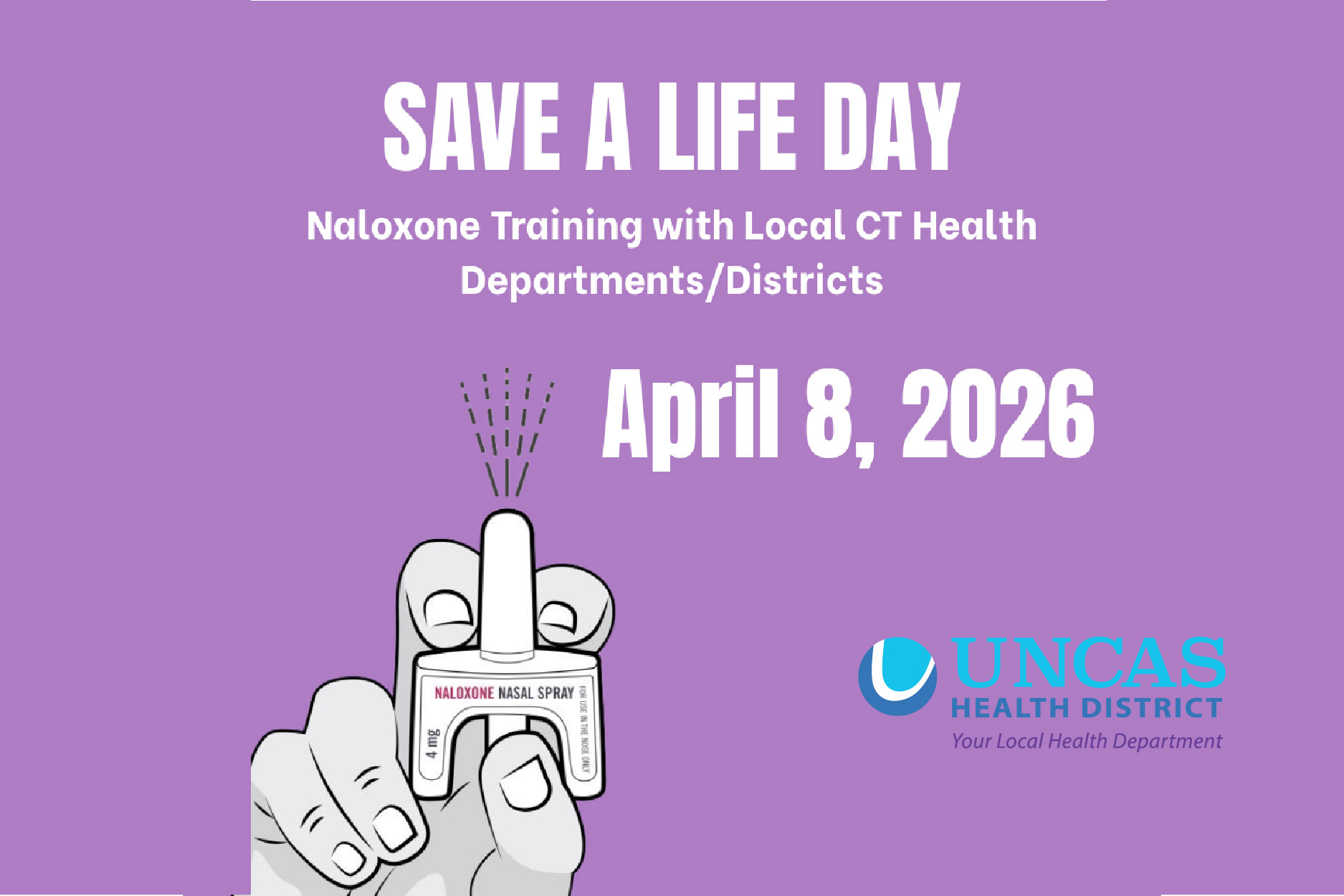
Save a Life Day — Free Nalaxone Training on April 8th

On Wednesday, April 8, the Uncas Health District will take part in Save A Life Day, a statewide effort focused on naloxone training, overdose prevention, and public education.

Held during National Public Health Week, Save A Life Day gives people a simple, practical way to learn how to respond in an overdose emergency. The goal is clear: help more people recognize the signs of an opioid overdose, know what to do, and feel prepared to use naloxone if needed.

As part of this effort, Uncas Health District will host a free drop-in naloxone training from 11:00 a.m. to 1:00 p.m. at the Mohegan Fire House, 2029 Norwich New London Turnpike, Uncasville. Community members can stop in at any time during those hours. No long program, no special background, and no complicated process — just an opportunity to learn something that could help save a life. Questions can be directed to [email protected].

Save A Life Day is about giving people the knowledge and confidence to act. Naloxone is a medication used to reverse an opioid overdose, and training helps people understand when and how to use it. For many families, friends, coworkers, and neighbors, that kind of information can make a real difference in a critical moment.

While Uncas Health District is proud to bring this training opportunity to our community, this is also part of a broader effort happening across Connecticut. Health departments and districts across the state are participating in Save A Life Day, demonstrating a shared commitment to overdose prevention and community education.

At its core, Save A Life Day is about preparedness, awareness, and reducing stigma. It is a reminder that overdose prevention is not just for medical professionals or emergency responders. Everyday people can learn these skills too — and that knowledge matters.

The Uncas Health District encourages community members to visit the Mohegan Fire House on April 8th and help save lives.

Poison Prevention: Safe Storage for Meds and Chemicals

Little girl with bottle of cleaning product in kitchen

Spring cleaning season is a good time to think about poison prevention at home. More than 90% of poisonings happen in people’s homes, most often in places like the kitchen, bathroom, and bedroom. That is why a few simple habits around storage, labeling, and disposal can make a real difference for children, pets, and adults alike.

Keep Medications Up, Away, and Out of Reach

Prescription medicines, over-the-counter pain relievers, vitamins, and supplements should all be stored in a locked cabinet or in a place where children cannot reach or see them. The CDC recommends keeping medicine “up and away and out of sight,” relocking safety caps each time, and making sure visiting family members or guests keep purses, bags, and coats containing medication out of reach, too.

This applies to everyday items, too. Common medicines like ibuprofen, aspirin, sleep aids, or gummies can seem harmless because they are familiar, but they can still be dangerous when taken by the wrong person, in the wrong amount, or by a child or pet. Safe storage matters even when a product is sold over the counter.

Store Cleaners and Chemicals Carefully

Household cleaners, disinfectants, laundry products, bleach, pesticides, and automotive chemicals should be treated with the same care as medication. Poison Help advises keeping these products in locked cabinets or otherwise out of reach and following all label directions carefully. It also warns against mixing household chemicals, as doing so can create dangerous gases.

Original Containers are a Safety Tool

One of the easiest ways to prevent poisoning is to keep medications and chemicals in their original, properly labeled containers. Poison Help specifically advises against storing cleaners or chemicals in food containers such as cups or bottles, because many poisonings happen when one product is mistaken for another.

That matters for adults as well as children. Once pills are moved into an unmarked bottle or a cleaner is poured into a drink container, it becomes much easier to make a dangerous mistake. Clear labels help everyone know exactly what they are handling.

Dispose of Unused Medications Safely

Unused or expired medicines should not sit in a cabinet where they can be accidentally swallowed, misused, or taken by someone who was not prescribed them. The FDA says the best option for most unused prescription and over-the-counter medicines is a drug take-back location or a prepaid mail-back envelope.

If those options are not readily available, the FDA says to check whether the medicine is on its flush list. Only medicines on that list should be flushed. If the medicine is not on the flush list, the FDA recommends mixing it with something undesirable, such as dirt, used coffee grounds, or cat litter, sealing the mixture in a bag or other container, and throwing it in the household trash after removing personal information from the packaging.

What to Do in an Emergency

If you think someone may have been poisoned, do not wait for symptoms to appear. Call Poison Help right away at 1-800-222-1222. The line is free, available 24/7, and connects you with your local poison center. If the person is not breathing, has collapsed, or is having a life-threatening emergency, call 911 immediately.

Small Prevention Steps Can Go a Long Way

Poison prevention does not have to be complicated. Put medications away right after use. Keep cleaners in the containers they came in. Store chemicals away from food. Read disposal directions before throwing anything out. These small, consistent habits can help prevent a frightening and avoidable emergency.

Harm Reduction Services at the Uncas Health District

Uncas Health District’s Mobile Health Team provides free, confidential community-based services, and current district materials describe harm-reduction resources, including syringe services and other supports. The Uncas Health District also offers comprehensive Harm Reduction Resources.

National Nutrition Month: Practical, Affordable Tips for Eating Healthy

Boy reaching for fresh fruit

As we begin to come out of winter and look ahead to spring, it is a good time to reset routines and make a few modest changes that support better health. That is very much the spirit of National Nutrition Month, held each March to encourage informed food choices and healthy eating habits.

Start Small This Spring

After a long winter, many of us are ready for a fresh start. The good news is that healthier eating does not have to mean expensive groceries, a perfect diet, or a total pantry overhaul. Small, realistic changes — like planning meals, choosing water more often, or adding one more fruit or vegetable to your day — can add up over time. USDA MyPlate encourages practical, budget-conscious steps that make healthy eating more manageable.

Healthy Eating Can Be Realistic and Accessible

It is also important to recognize that healthy eating looks different from household to household. Not everyone has easy access to fresh fruits and vegetables because of cost, transportation, work schedules, or limited nearby options. That is why it helps to think beyond “fresh only.” USDA guidance notes that frozen, canned, and dried fruits and vegetables can also be nutritious, practical, and budget-friendly choices.

Practical Tips for Eating Well on a Budget

Plan a few meals before you shop

A simple plan can help reduce waste and curb impulse purchases. Check what you already have at home, make a short grocery list, and think about meals that can stretch into leftovers for lunch the next day. MyPlate recommends planning ahead as one of the easiest ways to eat well on a budget.

Choose produce in forms that fit your budget

Fresh produce is great, but it is not the only option. Frozen vegetables, canned beans, canned fruit packed in juice, and dried fruits can all help make meals and snacks more nutritious while lasting longer in the pantry or freezer. USDA specifically recommends looking beyond fresh when price or shelf life is a concern.

Build snacks that help you stay full

Try pairing fiber and protein when possible. Apples with peanut butter, yogurt with fruit, carrots with hummus, or whole-grain crackers with cheese are simple examples that can be more satisfying than snacks high in added sugar.

Drink more water and fewer sugary beverages

Choosing water more often is one small change that can make a real difference. Reading the Nutrition Facts label can also help you spot added sugars in drinks and packaged foods. FDA guidance says the label is designed to help consumers make informed choices, including around added sugars.

Be thoughtful about “healthy” sweetener swaps

Honey may sound like a better option than sugar, but it still counts as an added sugar. Rather than simply swapping one sweetener for another, a more helpful goal is often to gradually use less added sugar overall. Try flavoring oatmeal or yogurt with fruit, cinnamon, or vanilla instead.

Keep affordable basics on hand

A few low-cost staples can make healthy eating easier: oats, brown rice, beans, eggs, peanut butter, tuna, frozen vegetables, and frozen fruit are all versatile options that store well and can be used in many meals.

Use Spring as a Reset — Not a Pressure Test

Spring does not have to be about a major lifestyle overhaul. It can simply be a season to take a few steps in a healthier direction. Add one fruit to your breakfast. Pack a better snack. Try one more home-cooked meal each week. Small changes are often the most sustainable ones.

Local Resources for Healthier Eating on a Budget

For Connecticut residents who need extra support, there are programs designed to make healthier food more accessible:

A Healthy Spring Starts with Simple Choices

This National Nutrition Month, the goal is not perfection. It is progress. As winter gives way to spring, even a few modest changes can help improve energy, support long-term health, and make meals and snacks a little more nourishing. Start where you are, use what you have, and remember that healthy eating can be practical, flexible, and achievable.