
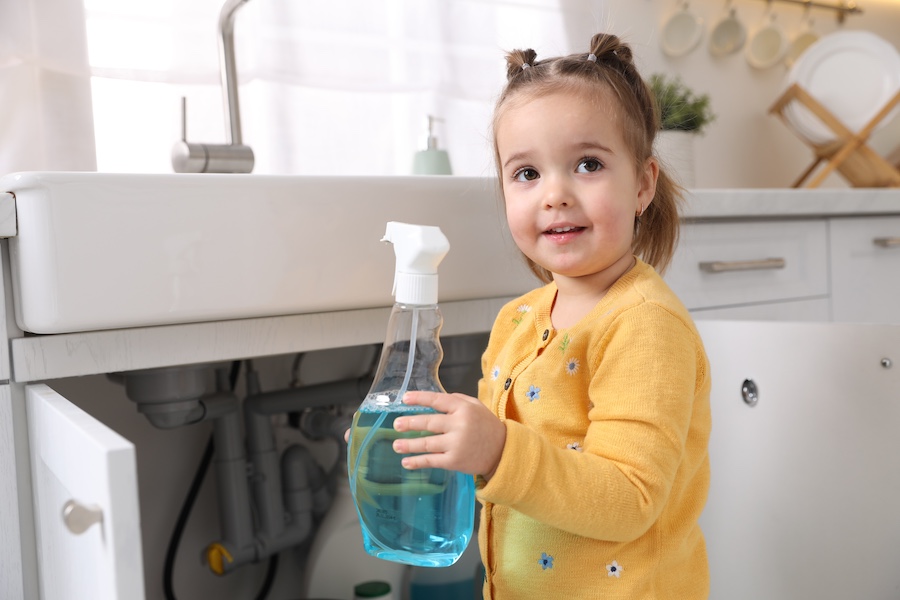
Spring cleaning season is a good time to think about poison prevention at home. More than 90% of poisonings happen in people’s homes, most often in places like the kitchen, bathroom, and bedroom. That is why a few simple habits around storage, labeling, and disposal can make a real difference for children, pets, and adults alike.
Keep Medications Up, Away, and Out of Reach
Prescription medicines, over-the-counter pain relievers, vitamins, and supplements should all be stored in a locked cabinet or in a place where children cannot reach or see them. The CDC recommends keeping medicine “up and away and out of sight,” relocking safety caps each time, and making sure visiting family members or guests keep purses, bags, and coats containing medication out of reach, too.
This applies to everyday items, too. Common medicines like ibuprofen, aspirin, sleep aids, or gummies can seem harmless because they are familiar, but they can still be dangerous when taken by the wrong person, in the wrong amount, or by a child or pet. Safe storage matters even when a product is sold over the counter.
Store Cleaners and Chemicals Carefully
Household cleaners, disinfectants, laundry products, bleach, pesticides, and automotive chemicals should be treated with the same care as medication. Poison Help advises keeping these products in locked cabinets or otherwise out of reach and following all label directions carefully. It also warns against mixing household chemicals, as doing so can create dangerous gases.
Original Containers are a Safety Tool
One of the easiest ways to prevent poisoning is to keep medications and chemicals in their original, properly labeled containers. Poison Help specifically advises against storing cleaners or chemicals in food containers such as cups or bottles, because many poisonings happen when one product is mistaken for another.
That matters for adults as well as children. Once pills are moved into an unmarked bottle or a cleaner is poured into a drink container, it becomes much easier to make a dangerous mistake. Clear labels help everyone know exactly what they are handling.
Dispose of Unused Medications Safely
Unused or expired medicines should not sit in a cabinet where they can be accidentally swallowed, misused, or taken by someone who was not prescribed them. The FDA says the best option for most unused prescription and over-the-counter medicines is a drug take-back location or a prepaid mail-back envelope.
If those options are not readily available, the FDA says to check whether the medicine is on its flush list. Only medicines on that list should be flushed. If the medicine is not on the flush list, the FDA recommends mixing it with something undesirable, such as dirt, used coffee grounds, or cat litter, sealing the mixture in a bag or other container, and throwing it in the household trash after removing personal information from the packaging.
What to Do in an Emergency
If you think someone may have been poisoned, do not wait for symptoms to appear. Call Poison Help right away at 1-800-222-1222. The line is free, available 24/7, and connects you with your local poison center. If the person is not breathing, has collapsed, or is having a life-threatening emergency, call 911 immediately.
Small Prevention Steps Can Go a Long Way
Poison prevention does not have to be complicated. Put medications away right after use. Keep cleaners in the containers they came in. Store chemicals away from food. Read disposal directions before throwing anything out. These small, consistent habits can help prevent a frightening and avoidable emergency.
Harm Reduction Services at the Uncas Health District
Uncas Health District’s Mobile Health Team provides free, confidential community-based services, and current district materials describe harm-reduction resources, including syringe services and other supports. The Uncas Health District also offers comprehensive Harm Reduction Resources.