
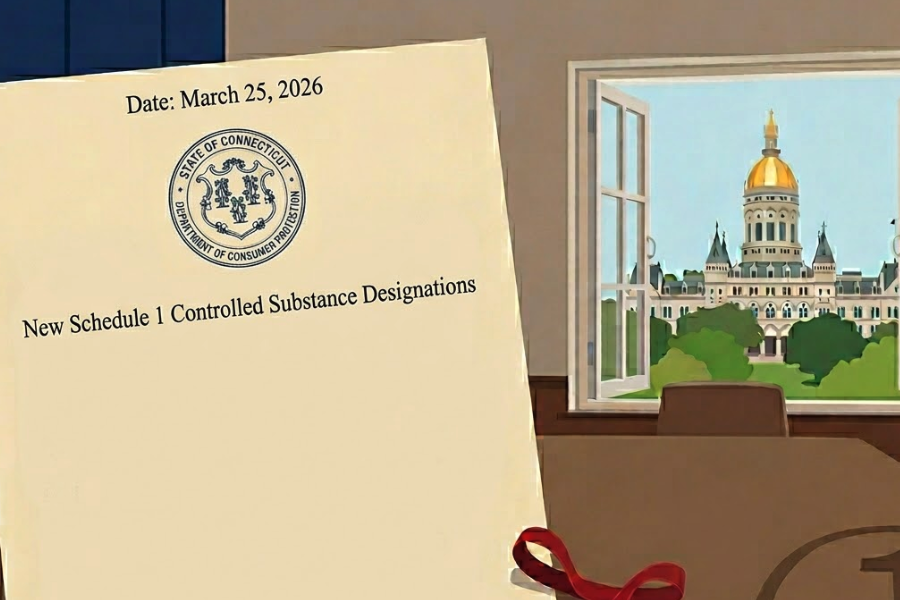
Kratom, Tianeptine, and five other substances are now Schedule 1 Controlled Substances and must be removed from shelves by Wednesday. Resources are available for those struggling with addiction.
- Mitragyna speciosa (kratom), including its leaves, stem, and any extracts
- 7-hydroxymitragynine (7-OH, a kratom derivative)
- Bromazolam
- Flubromazolam
- Nitazenes, including, but not limited to, isotonitazene
- Tianeptine
- Phenibut
“I’m so proud to be a part of a team that truly prioritizes the health, well-being, and safety of our residents, and who have worked tirelessly to see these dangerous substances removed from our shelves,” said Lt. Governor Susan Bysiewicz. “With false marketing that led consumers to believe these are safe products, and with candy-like flavor options, these substances posed a clear threat to those battling substance use disorder and our youngest residents. This schedule change is a necessary step in our continued efforts to combat addiction.”
Attorney General William Tong announced today that he has sent letters to all known distributors and manufacturers of Kratom products to ensure full awareness and compliance with the law.
“As of Wednesday, it will be illegal to possess, manufacture, sell, or distribute these drugs, including Kratom and tianeptine, sometimes referred to as gas station heroin,” said Attorney General William Tong. “These products are unsafe, untested, and if you see them, do not purchase them and call the police. Today, I am mailing letters to every known distributor and manufacturer of these substances to ensure full awareness and compliance with the law. These companies are on notice—if you sell in Connecticut, we will know, and we will hold you accountable.”
“These substances have no approved medical use and have been widely available for sale in establishments easily accessed by children and other vulnerable populations,” said DCP Commissioner Bryan Cafferelli. “These products were never regulated, tested, or otherwise deemed safe for human consumption, but have been marketed as health products, misleading people to assume they are safe when, in fact, they are addictive, have a high potential for misuse, and pose a serious threat to public health and safety. It has been a team effort to designate these products as controlled substances, stand up enforcement protocols, and also ensure that people who need support for withdrawal aren’t left behind, and we are grateful to our sister agencies and community partners for their efforts.”
“As Connecticut takes this important step to protect residents from the harms of kratom and similar substances, it is essential that individuals and families know that support is available,” said DMHAS Commissioner Nancy Navarretta. “Kratom use is more common than many realize, and the risks are often misunderstood. No one should hesitate to reach out for help. Treatment works, and recovery is absolutely possible. If you or someone you care about needs help, support is available. You can call the Access Line at 1-800-563-4086 or dial 2-1-1 to be connected with services immediately.”
“The classification of kratom as a Schedule I substance in Connecticut is a clear line in the law,” said Col. Daniel Loughman, Commanding Officer, CSP. “The Connecticut State Police will not tolerate its illegal sale or distribution. Those who choose to ignore the law should expect enforcement action, including arrest and prosecution. We are committed to protecting our communities and will act decisively to uphold the law.”
“Making these addictive substances illegal in Connecticut is a major step forward for the protection of our children and sends a strong message that we will not tolerate attempts to flood our state with cheap, synthetic opioid-like substances that introduce teens and young adults to a lifetime of long-term substance abuse disorder," said Rep. Tracy Marra, a trained pharmacist. "We've done our part to remove these dangerous compounds from convenience stores and local shops; now it's time for our neighboring states and the federal government to do the same."
“Through multiple environmental scans, the STEPS Youth Council identified kratom as an emerging concern among youth and took action,” said Kristin Sandler, Outreach Coordinator for Southington STEPS. “Students were particularly troubled by the product’s appeal to young people and how easily it can be accessed in retail settings, especially when compared to other substances that are regulated in the state to limit youth access.”
The Legislative Regulation Review Committee approved regulations in February to designate these substances as Schedule 1 Controlled Substances.
Businesses still offering these products for sale should:
- Remove them from shelves immediately.
- Prior to March 25, 2026, return all products to your wholesaler or destroy the products. Information on how to dispose of unwanted controlled substances can be found on the Department of Consumer Protection website.
Individuals struggling with addiction to these or any other substances can find information about available services, including treatment, withdrawal management, and rehabilitation programs, by visiting the Department of Mental Health and Addiction Services website.
Questions about controlled substances can be directed to DCP’s Drug Control Division by email [email protected].
