
Peak Flu Season Is Here — Why Vigilance Matters (Especially in 2026)

Every winter, influenza shows up in a familiar way: schools and workplaces see more absences, urgent care wait times climb, and many households cycle through coughs, fevers, and fatigue. That’s because flu season in the U.S. typically ramps up in fall and winter, with flu activity most often peaking between December and February — and historically, February is the most common peak month.

That timing matters. When we hit the “peak,” flu spreads more easily, more people are contagious at the same time, and the chance of bringing illness into your home, workplace, or social circle goes up. The good news: a few practical habits—done consistently—can make a real difference.

Flu Shots are Still Too Low, and Fewer Doses Have Been Given in Key Settings

As of early January 2026, CDC survey data show that 44.1% of adults have received a flu shot. That means more than half of adults are still unvaccinated during the heart of flu season.

At the same time, CDC’s weekly dashboard (based on claims data) indicates fewer flu vaccine doses have been administered to adults in retail pharmacies and physician medical offices compared with the same point last season. As of December 20, 2025, an estimated 33.2 million adult doses were given in pharmacies (about 1.8 million fewer than last season), and 18.3 million were given in medical offices (about 807,163 fewer). That’s roughly 2.6 million fewer doses in those two settings combined.

Bottom line: even with vaccination available in many convenient places, too many people remain unprotected—and that creates more opportunities for flu to spread and cause severe illness.

It’s Not Too Late to Get Vaccinated

CDC recommends annual flu vaccination for everyone ages 6 months and older who doesn’t have contraindications. And while the vaccine isn’t perfect, the CDC notes that even when circulating viruses differ from what’s expected, vaccination still helps protect against severe illness, hospitalization, and death.

If you’ve been meaning to get a flu shot, this is your nudge: it can still help—especially for older adults, young children, pregnant people, and anyone with chronic medical conditions.

Common-Sense Ways to Prevent Flu (and Other Winter Respiratory Illnesses)

Think of flu prevention like layers. No single step is flawless, but stacking a few habits dramatically improves your odds.

1) Stay Home When You’re Sick

One of the most powerful ways to stop the spread is also the simplest: don’t share your germs. CDC advises returning to normal activities only when, for at least 24 hours, both are true:

  • Your symptoms are improving overall, and

  • You’ve had no fever without using fever-reducing medication.

2) Cover Coughs and Sneezes — and Consider a Mask in Crowded Indoor Spaces

Flu spreads mainly through respiratory droplets when people cough, sneeze, or talk. Covering your mouth and nose helps, and if you’re sick (or caring for someone who is), a well-fitting mask adds an extra layer that can reduce the spread to others.

3) Wash Hands Often — and Avoid Touching Your Face

Handwashing (or using alcohol-based sanitizer when soap and water aren’t available) reduces the risk of transferring germs from surfaces to your eyes, nose, or mouth.

4) Improve Indoor Air When Possible

Fresh air and cleaner air matter more than many people realize. CDC includes taking steps to improve air quality—bringing in outdoor air, using filtration, or choosing outdoor gatherings when practical—as part of efforts to reduce respiratory virus spread.

5) Clean “High-Touch” Surfaces During Illness Waves

Doorknobs, light switches, phones, remote controls, and countertops are constantly handled—especially in shared spaces. Regular cleaning during a household illness can help reduce spread.

6) Keep Your Body Resilient

Good sleep, hydration, nutritious food, and stress management won’t “block” flu on their own—but they support your immune system and recovery if you do get sick.

Know the Symptoms — and Act Early if You’re High-Risk

Flu often comes on suddenly. Common symptoms include fever or chills, cough, sore throat, runny or stuffy nose, body aches, headache, and fatigue (sometimes vomiting/diarrhea, more often in children).

If you’re in a group at higher risk for complications (including young children, adults 65+, pregnant people, and those with certain medical conditions), CDC recommends contacting a healthcare provider early if symptoms start—because antiviral medications work best when started within about 2 days of symptom onset.

When to Seek Urgent or Emergency Care

Most people recover at home, but the flu can become serious. CDC lists emergency warning signs that should prompt immediate medical attention. A few key examples include:

In adults: difficulty breathing/shortness of breath, chest or abdominal pain/pressure, confusion or inability to arouse, seizures, not urinating, severe weakness, or symptoms that improve then worsen.

In children: fast or troubled breathing, bluish lips/face, ribs pulling in with breaths, chest pain, dehydration, seizures, high fever not controlled by medicine, or symptoms that improve then worsen.

If you’re unsure, call your healthcare provider for guidance.

A Community Reminder from the Uncas Health District

Flu season peak is exactly when small choices add up: getting vaccinated, staying home when sick, and protecting others in shared indoor spaces. Whether you’re looking out for a newborn in the family, an older neighbor, a coworker with a chronic condition, or your own household, these steps help reduce the spread of flu and similar respiratory illnesses.

DPH Highlights National Influenza Vaccination Week

man getting flu vaccine.

The state vaccination rate has declined 6 percent compared to last year.

The Connecticut Department of Public Health (DPH) is urging everyone to give the gift of health, not only to themselves, but also to their family and community, this season by getting vaccinated against respiratory viruses during National Influenza Vaccination Week. The annual observance serves as a reminder that it is not too late to get vaccinated, as we enter peak season that can extend into the spring.

Dec. 1-5 is National Influenza Vaccination Week, and in Connecticut, we have had over 600 flu cases in November. Last month, DPH confirmed the first death from influenza virus this 2025-26 season was an adult Hartford County resident, 80-89 –years old. There have been nine COVID-19 deaths reported this season and zero RSV deaths.

“As we prepare for travel and celebrations in close quarters, we also enter the peak season for respiratory illnesses like influenza, COVID-19, and RSV,” said DPH Commissioner Manisha Juthani, MD. “One of the best ways to ensure a safe and healthy celebration for everyone is by ensuring you and your family are up to date on all recommended vaccinations. If you haven’t gotten your seasonal shots, it’s not too late to protect yourself from potential serious complications and protect our vulnerable populations, including infants, older adults, and people with weakened immune systems who may not be able to get vaccinated themselves.”

Unfortunately, seasonal vaccination rates have declined over the last year. In Connecticut, 1,004,668 residents have been vaccinated against influenza this season so far, compared to 1,068,938 at the same time last year, representing a 6 percent decrease. Similarly, 309,199 doses of COVID-19 vaccine have been administered so far this year, compared to over 432,259 at the same time last season, representing a 28.5 percent decrease.

Vaccines have been rigorously tested and examined for decades and are one of the most significant public health achievements in human history. It typically takes about two weeks for your body to build complete immunity after a shot, so getting vaccinated now ensures you're protected in time for upcoming gatherings.

CT DPH’s current vaccine and prevention guidance to prevent respiratory viral diseases is:

Everyone 6 months of age or older should receive an annual dose of the influenza vaccine.

Everyone 6 months of age or older should receive an updated COVID-19 vaccine.

Adults 60 years of age and older, as well as pregnant individuals, are eligible to receive an RSV vaccine (Abrysvo). A monoclonal antibody, Nirsevimab (Beyfortus), is recommended for all infants younger than 8 months of age who are born during—or who are entering—RSV season.

Residents can receive their vaccines from their healthcare provider, a retail pharmacy, or by visiting vaccinefinder.org to find a vaccination location near them.

For more information on current respiratory virus cases, hospitalizations, and deaths, please visit here.

Flu Vaccines: Protect Yourself and Your Loved Ones

As December approaches, we are entering the heart of flu season. The flu can have serious consequences, especially for individuals at higher risk, including children, older adults, and those with certain health conditions. National Influenza Vaccination Week (NIVW), observed from December 2-6, serves as an important reminder that it’s not too late to protect yourself and your loved ones by getting your flu vaccine.

Why the Flu Vaccine Matters

Every year, millions of people in the U.S. get sick with the flu. For many, the illness can lead to complications requiring hospitalization or, worse, be life-threatening. Vaccination is the best defense against flu-related illness. The flu vaccine significantly reduces your risk of getting the flu and can also lessen the severity of symptoms if you do get sick. Importantly, it protects those around you, including infants who are too young to be vaccinated and others who may be more vulnerable.

Unfortunately, flu vaccination coverage was lower last season, particularly among children and other high-risk groups. This year, it’s critical to ensure as many people as possible are protected, and National Influenza Vaccination Week is a timely opportunity to act.

Wild to Mild

Uncas Health District Has Flu Vaccines

Flu Shots are available through Uncas Health District. Vaccines are available through our Mobile Health Team or by appointment. To schedule, simply call 860-823-1189

There are still plenty of vaccine doses available, and flu shots are free for individuals with the following insurance plans:

  • Anthem BC/BS
  • Cigna
  • ConnectiCare
  • Medicare
  • TriCare
  • UnitedHealthCare

Thanks to a donation, individuals without insurance or with other insurance can also receive their flu vaccine at no cost this season. Normally, the standard-dose flu vaccine costs $20, and the high-dose flu vaccine is $65 for those without insurance.

Who Should Get the Flu Vaccine?

The Centers for Disease Control and Prevention (CDC) recommends flu vaccination for everyone aged 6 months and older. It’s especially important for individuals in high-risk groups, including:

  • Pregnant people
  • Young children (especially those under 5)
  • Adults 65 and older
  • Individuals with chronic medical conditions (e.g., asthma, diabetes, heart disease)

Take Action Against the Flu

The flu vaccine is your first and most important step in protecting yourself and your loved ones from the flu. With the holiday season in full swing, don’t wait—get vaccinated today. If you’re ready to take action, contact the Uncas Health District for your appointment or visit their Mobile Health Team at a location near you.

Let’s all do our part to keep our community healthy this flu season. Protect yourself, protect your loved ones—get your flu vaccine today!

DPH Confirms Connecticut’s First Influenza Deaths of Flu Season

CT reports season's first flu deaths

Connecticut Department of Public Health Commissioner Manisha Juthani, MD, confirmed the first two deaths of state residents due to influenza (flu) for the 2024-25 respiratory viral disease season. The announcement came at a news conference this morning where Governor Ned Lamont received his COVID-19 and flu vaccines.

The first influenza death occurred in an adult resident, 90-99 years old, who died in September. The second influenza death was an infant less than one year old that occurred in October.

“This is a tragic reminder that the 2024-25 respiratory viral disease season is here. As we approach the holiday season and people spend more time indoors, I strongly encourage all Connecticut residents to make sure they are up to date on their seasonal vaccines, particularly older individuals and those with multiple medical conditions,” said DPH Commissioner Manisha Juthani, MD.

The current vaccine and prevention guidance to prevent respiratory viral diseases is:

  • Everyone 6 months of age or older should receive an annual dose of influenza vaccine.
  • Everyone 6 months of age or older should receive an updated COVID-19 vaccine.
  • Adults 60 years of age and older and pregnant people are eligible to receive an RSV vaccine (Abrysvo). A monoclonal antibody, Nirsevimab (Beyfortus), is recommended for all infants younger than 8 months of age who are born during—or who are entering—RSV season.
  • Residents can receive their vaccines from their health care provider, a retail pharmacy, or by visiting vaccines.gov to find a vaccination location near you.
  • The spread of respiratory viruses like the flu, COVID-19, and RSV can also be prevented through proper respiratory virus etiquette. These practices include handwashing, remaining home when sick, disinfecting surfaces, and masking if you have any respiratory symptoms.
  • The Federal Government is once again offering four free COVID-19 self-tests per household at covidtests.gov These tests are intended for use throughout the 2024 holiday season to detect currently circulating COVID-19 variants

More information about respiratory viral diseases is available at https://portal.ct.gov/DPH/Infectious-Diseases/RVD/Respiratory-Viral-Disease-Surveillance.

Flu Update: Busy Flu Season Continues as Nearly 80 New Cases Reported

weekly flu update
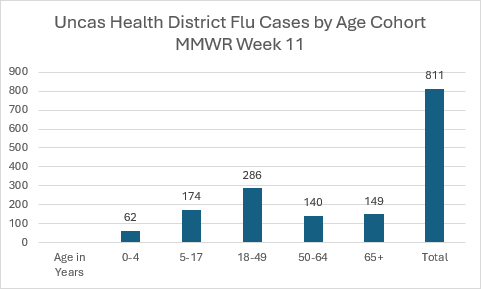
In what continues to be one of the busiest flu seasons in recent memory, 79 new influenza cases have been identified in the 11 cities and towns of the Uncas Health District this flu season, according to March 15, 2024, data from the Connecticut Department of Health. This week’s reported numbers bring the flu season total to 811 cases in the district.
Those aged 18-49 years old represent the largest group for positive flu cases, comprising 286 of the total cases reported, followed by 5-17-year-olds with 174 cases. It is important to note that influenza cases are only reported if there is a hospitalization or if the positive test comes from a minor.

Even though spring has sprung, flu season is far from over. It is important to remain cautious, and it’s not too late to receive your flu vaccine. Vaccination is the single most effective way to protect yourself and others from the flu. Talk to your doctor today about getting vaccinated – it’s still your best defense against influenza. Remember to:

  • Wash your hands frequently with soap and water, especially after being in public places or around sick people.
  • Cover your coughs and sneezes with a tissue or your elbow to prevent spreading germs.
  • Stay home if you’re feeling unwell to avoid making others sick.

Stay safe and healthy!

Additional Flu Resources

Flu Update: 90 New Cases Reported Last Week, Season Total Approaching 700

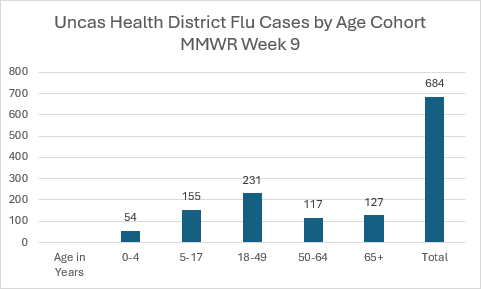
90 new influenza cases have been identified in the 11 cities and towns of the Uncas Health District this flu season, according to March 1, 2024, data from the Connecticut Department of Health. This week’s reported numbers bring the flu season total to 684 cases in the district.

Those aged 18-49 years old represent the largest group for positive flu cases, comprising 231 of the total cases reported, followed by 5-17-year-olds with 155 cases.

It is important to note that influenza cases are only reported if there is a hospitalization or if the positive test comes from a minor.

flu cases by age

Even though we are experiencing spring-like temperatures this week, flu season is far from over. It is important to remain cautious, and it’s not too late to receive your flu vaccine. Vaccination is the single most effective way to protect yourself and others from the flu. Talk to your doctor today about getting vaccinated – it’s still your best defense against influenza. Remember to:

  • Wash your hands frequently with soap and water, especially after being in public places or around sick people.
  • Cover your coughs and sneezes with a tissue or your elbow to prevent spreading germs.
  • Stay home if you’re feeling unwell to avoid making others sick.

Stay safe and healthy!


Flu Update: New Cases Slow, But Flu Season is Far From Over

flu update, february 24

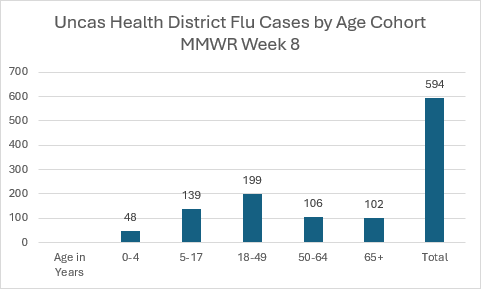
18 new influenza cases have been identified in the 11 cities and towns of the Uncas Health District this flu season, according to February 24, 2024, data from the Connecticut Department of Health. This week’s reported numbers bring the flu season total to 594 cases in the district.

Those aged 18-49 years old represent the largest group for positive flu cases, comprising 199 of the total cases reported, followed by 5-17-year-olds with 139 cases.

It is important to note that influenza cases are only reported if there is a hospitalization or if the positive test comes from a minor.

While the recent snowfall has melted, flu season generally lasts through April or May. So, it is important to remain cautious, and it’s not too late to receive your flu vaccine. Vaccination is the single most effective way to protect yourself and others from the flu. Talk to your doctor today about getting vaccinated – it’s still your best defense against influenza. Remember to:

  • Wash your hands frequently with soap and water, especially after being in public places or around sick people.
  • Cover your coughs and sneezes with a tissue or your elbow to prevent spreading germs.
  • Stay home if you’re feeling unwell to avoid making others sick.

Stay safe and healthy!

Flu Update: 27 New Cases Reported This Week (Feb. 17)

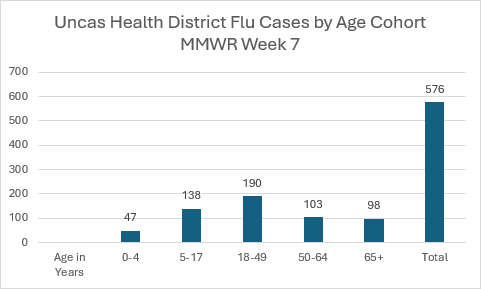
27 new influenza cases have been identified in the 11 cities and towns of the Uncas Health District this flu season, according to February 17, 2024, data from the Connecticut Department of Health. This week’s reported numbers bring the flu season total to 576 cases in the district.

Those aged 18-49 years old represent the largest group for positive flu cases, comprising 190 of the total cases reported, followed by 5-17-year-olds with 138 cases.

It is important to note that influenza cases are only reported if there is a hospitalization or if the positive test comes from a minor.

While the recent warm and sunny weather might feel like spring, eastern Connecticut is still very much in the thick of flu season. Flu activity is currently elevated and may continue to stay that way for several weeks.

So, don’t pack away those good habits just yet. Remember to:

  • Wash your hands frequently with soap and water, especially after being in public places or around sick people.
  • Cover your coughs and sneezes with a tissue or your elbow to prevent spreading germs.
  • Stay home if you’re feeling unwell to avoid making others sick.

And it’s not too late to get your flu shot. Vaccination is the single most effective way to protect yourself and others from the flu. Talk to your doctor today about getting vaccinated – it’s still your best defense against influenza.

Stay safe and healthy!

Flu Update: 44 New Cases Reported in Past Week

Flu Update, February 3, 2024

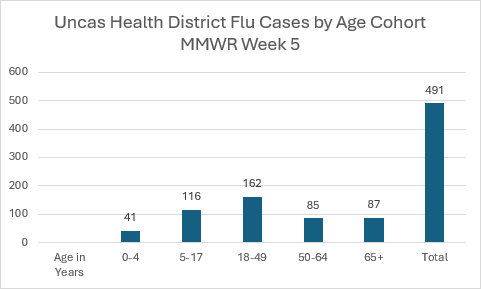
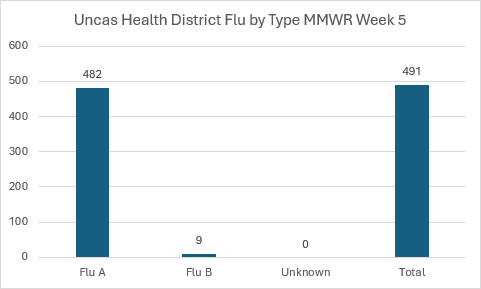
44 new influenza cases have been identified in the 11 cities and towns of the Uncas Health District this flu season, according to February 3, 2024, data from the Connecticut Department of Health. This week’s reported numbers bring the flu season total to 491 cases in the district.

Those aged 18-49 years old represent the largest group for positive flu cases, comprising 162 of the 447 total cases reported, followed by 5-17-year-olds with 116 cases.

It is important to note that influenza cases are only reported if there is a hospitalization or if the positive test comes from a minor.

Week 5 Flu NumbersFlu Chart by type

While the recent warm and sunny weather might feel like spring, eastern Connecticut is still very much in the thick of flu season. Flu activity is currently elevated and may continue to stay that way for several weeks.

So, don’t pack away those good habits just yet. Remember to:

  • Wash your hands frequently with soap and water, especially after being in public places or around sick people.
  • Cover your coughs and sneezes with a tissue or your elbow to prevent spreading germs.
  • Stay home if you’re feeling unwell to avoid making others sick.

And it’s not too late to get your flu shot. Vaccination is the single most effective way to protect yourself and others from the flu. Talk to your doctor today about getting vaccinated – it’s still your best defense against influenza.

Stay safe and healthy!


Get Your Flu Shot

Flu Update: Total Cases Approach 500 for Current Flu Season

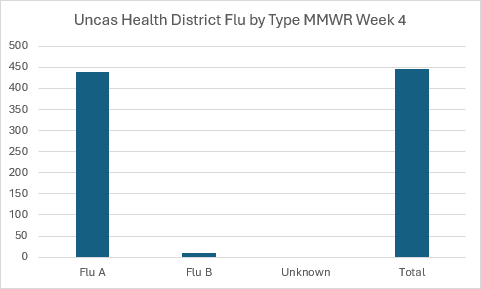
flu update week 4

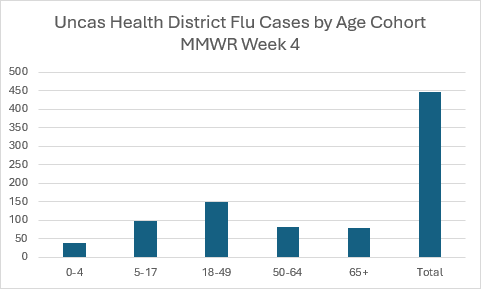
32 new influenza cases have been identified in the 11 cities and towns of the Uncas Health District this flu season, according to January 27, 2024, data from the Connecticut Department of Health. This week’s reported numbers bring the flu season total to 447 cases in the district.

Those aged 18-49 years old represent the largest group for positive flu cases, comprising 150 of the 447 total cases reported, followed by 5-17-year-olds with 99 cases.

It is important to note that influenza cases are only reported if there is a hospitalization or if the positive test comes from a minor.

flu cases - 1.27 flu cases week 4

The colder months bring an increased risk of influenza, but getting vaccinated now can safeguard your health. The flu vaccine is essential for protecting individuals from potentially severe complications, especially for high-risk groups like:

  • People 65 and older
  • Individuals with chronic health conditions (heart disease, lung disease, diabetes, asthma)
  • Pregnant women
  • Children under 5
  • Those caring for or living with high-risk individuals

Flu vaccines are safe, effective, and proven to prevent millions of illnesses, hundreds of thousands of hospitalizations, and thousands of deaths annually.

If you haven’t already, prioritize getting vaccinated, especially if you fall into a high-risk group. It’s not too late to protect yourself and others from the flu’s impact.

Vaccination is a proactive step towards a healthier community. Choose prevention and navigate the winter with greater resilience. Let’s work together to minimize the flu’s impact this season.

Get Your Flu Shot