Protecting Your Household from Risks with Wells, Septics, Household Hazards, and Lead

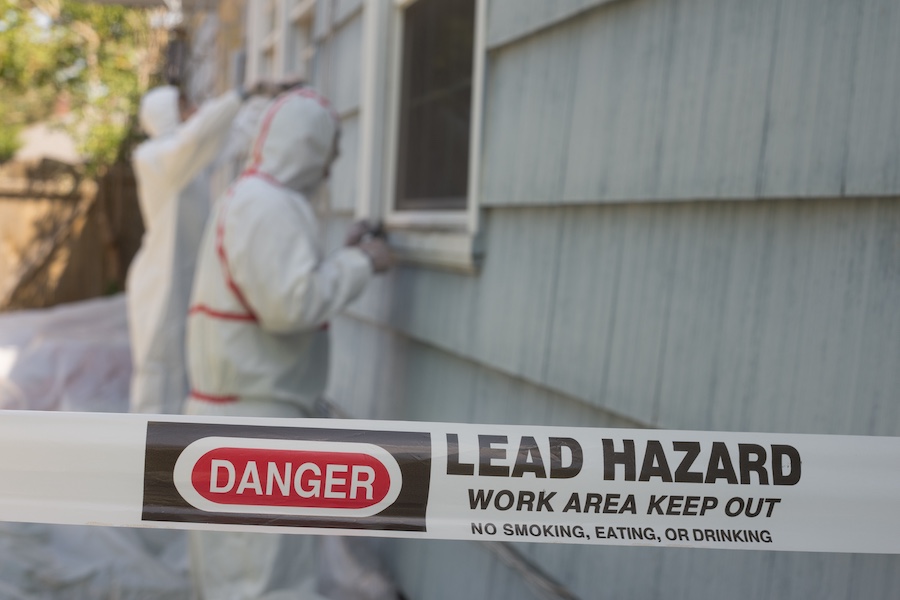
Hazard tape reads 'DANGER LEAD HAZARD WORK AREA KEEP OUT' in foreground as two workers in protective hazmat suits work near a house window in the background.

Environmental health begins at home. The systems and materials we rely on every day — private wells, septic systems, household products, and older housing materials — can affect health and safety when they are not properly maintained or managed. In Eastern Connecticut, where many homes rely on private wells and septic systems and older housing remains common, prevention and routine maintenance are essential for protecting your household.

Private Wells Require Ongoing Attention

For households served by a private well, water quality should never be assumed. As noted in the Uncas Health District’s well water information, regular testing is important because water quality can change over time, and appearance alone does not indicate whether water is safe. Annual testing, as well as additional follow-up after flooding, repairs, or noticeable changes in taste, odor, or appearance, can help identify concerns before they become health risks.

In southeastern Connecticut, well owners should also be aware of local conditions that may affect groundwater quality. Flooding, stormwater intrusion, runoff, impacts from nearby septic systems, and certain historic or current land uses can all affect private well safety.

PFAS and Emerging Water Quality Concerns

One emerging issue for private well owners is PFAS, a group of chemicals that persist in the environment and may affect drinking water sources. The Connecticut Institute of Water Resources at UConn provides helpful information about PFAS testing, why these substances are a concern, and when testing may be appropriate for private wells. Staying informed about groundwater risks is an important step in protecting household water quality.

Septic Systems Are Part of Home Environmental Health

Septic systems are another important part of home environmental health. When properly maintained, they help safely manage wastewater and protect groundwater quality. When neglected, they can contribute to contamination and create both environmental and public health concerns. Routine inspections, pumping as needed, water conservation, and proper disposal practices all play an important role in keeping a septic system functioning effectively.

Everyday Household Habits Matter

Environmental health also includes the choices made inside the home every day. Improperly disposing of grease, chemicals, medications, or non-flushable products can damage septic systems and introduce hazards into the home environment. Small steps—such as using household chemicals carefully, storing hazardous products safely, and avoiding improper disposal—can help reduce risks and protect both indoor and outdoor environmental health.

Lead Safety in Older Homes

Lead safety is another critical part of maintaining a healthy home, particularly in older housing. Connecticut’s Lead Poisoning Prevention and Control Program provides important guidance to residents on the dangers of lead exposure and the steps they can take to prevent it. Lead remains a serious health concern, especially for young children and pregnant individuals, and there is no safe level of lead exposure.

Older homes are especially important to monitor because lead-based paint was commonly used before 1978. As painted surfaces deteriorate—or are disturbed during repair or renovation—lead dust can be released into the home. Windows, doors, trim, porches, and other high-friction surfaces can be common sources of exposure. The state’s lead prevention program offers resources for homeowners, families, and contractors to help identify hazards and reduce exposure.

Renovations Can Increase Risk

Renovation work in older homes should be approached carefully. Sanding, scraping, demolition, and window replacement can all disturb lead-based paint if proper precautions are not taken. Using lead-safe work practices and qualified professionals can help reduce the spread of hazardous dust and keep household members safer during home improvement projects. Homeowners planning work on pre-1978 housing should review the state’s lead safety and prevention guidance before beginning a project.

Prevention Starts at Home

Residents are encouraged to think of environmental health as an ongoing part of home maintenance rather than something addressed only when a problem arises. Annual well testing, awareness of PFAS and groundwater risks, regular septic maintenance, safer handling of household products, and lead-safe renovation practices can all help reduce preventable hazards at home.

Protecting health at home often begins with awareness. By staying informed and taking preventive steps, households can help safeguard their drinking water, living environment, and long-term well-being. For more information, residents can learn more about PFAS testing through UConn’s Connecticut Institute of Water Resources and access the state’s Lead Poisoning Prevention and Control Program.
National Volunteer Week: The Essential Role of Volunteers in Our Communities

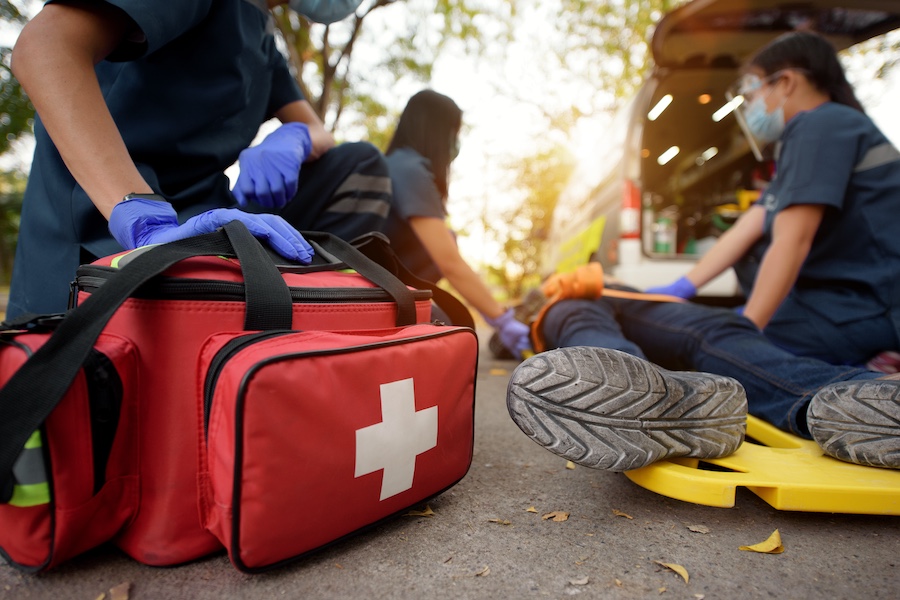
Emergency responders treat a patient on a yellow spine board beside an ambulance; red first-aid bag in foreground with a white cross.

During National Volunteer Week, April 19–25, 2026, Uncas Health District is proud to recognize the individuals whose service helps protect the health, safety, and resilience of our communities. National Volunteer Week is a longstanding annual observance that honors the impact of volunteer service and the many ways volunteers strengthen communities across the country.

Across the towns served by Uncas Health District, volunteerism remains an essential part of everyday life. In public health and community safety, volunteers help sustain the networks residents rely on in both routine and emergency situations. Their service often happens quietly, but its value is seen every day in stronger preparedness, broader community support, and a deeper sense of local connection.

In many communities within the Uncas Health District, volunteer fire and EMS resources are an important part of local emergency response. That commitment is visible across Eastern Connecticut, where volunteer departments continue to provide fire protection and emergency medical services to their towns and surrounding areas.

Volunteerism is equally important in public health. At Uncas Health District, we see firsthand how health professionals, community members, and local partners contribute their time and expertise in support of clinics, education, outreach, preparedness, and community wellness initiatives. These efforts help extend the reach of public health services and strengthen our ability to respond to community needs in meaningful and practical ways.

One of the clearest examples of this commitment is the Uncas Health District Medical Reserve Corps (Uncas MRC), Region 4. The Uncas MRC is part of a national network of community-based volunteers who support public health infrastructure during emergencies and help strengthen community preparedness year-round. The program serves the Uncas Health District’s 11 municipalities — Bozrah, Franklin, Griswold, Lebanon, Lisbon, Montville, Norwich, Preston, Salem, Sprague, and Voluntown — and welcomes both medical professionals and non-medical support personnel.

Through the Medical Reserve Corps, volunteers receive free training and participate in drills, exercises, and community activities that prepare them to assist when needed. Uncas Health District notes that MRC volunteers support efforts such as flu clinics, health expos, recruitment events, and preparedness outreach, helping build a stronger and more resilient public health system across the region.

This is an important reminder that volunteer service in public health takes many forms. Some volunteers respond directly in emergencies. Others contribute through education, planning, clinic support, outreach, and preparedness efforts that help communities remain informed and connected. Whether serving through fire and EMS organizations, public health programs, or the Medical Reserve Corps, volunteers make a meaningful contribution to the well-being of our towns.

At Uncas Health District, we recognize that strong communities depend on collaboration. Public health is most effective when supported not only by agencies and systems, but also by individuals who are willing to share their time, skills, and commitment in service to others. Volunteers help strengthen local service capacity, improve community readiness, and reinforce partnerships that protect health and safety throughout the district.

This National Volunteer Week, Uncas Health District extends sincere appreciation to all those who volunteer in support of community health, emergency response, and public service. We are especially grateful to the members of our Medical Reserve Corps, as well as the volunteer fire and EMS personnel and community partners whose dedication continues to make a lasting difference across our region.

Their service reflects the very best of public health in action: local, responsive, compassionate, and rooted in community.

National Infant Immunization Week: Why Staying on Schedule Matters

Baby lying on a bed as a clinician in blue gloves administers a vaccine in the upper arm.

Routine vaccines help protect babies and young children during the years they are most vulnerable to serious illness.

Each April, National Infant Immunization Week highlights the importance of protecting infants and young children from vaccine-preventable diseases. It also serves as a timely reminder for parents and caregivers to review their child’s vaccination schedule and stay current with recommended well-child visits.

The first two years of life are especially important for immunizations. During this stage, children are more vulnerable to illnesses that can lead to serious complications. Staying on schedule helps ensure they receive protection at the right time, when it matters most.

Routine childhood vaccines remain one of the safest and most effective ways to prevent the spread of serious disease. Keeping up with recommended immunizations not only helps protect individual children but also supports the health of families, schools, and the broader community.

National Infant Immunization Week is a good opportunity to check in with your child’s pediatrician or healthcare provider, ask questions, and make sure your family is up to date. Small steps now can help provide lasting protection in the months and years ahead.

Private Wells: When and Why to Test Your Water

If your home uses a private well, the safety of that water is largely your responsibility. Connecticut advises regular testing because water quality can change over time, and testing is the only way to know whether your water is safe to drink. State health officials also note that about 23% of Connecticut residents rely on private wells, so this is not a small issue.

A common misconception is that if a well passed inspection when the house was built or purchased, it must still be fine today. That is not necessarily true. Connecticut specifically notes that mortgage-related water tests are not required by law and may not include all contaminants. Even water that looks, smells, and tastes normal can contain contaminants that affect health.

Why Testing Matters, Especially in Southeastern Connecticut

For homeowners in southeastern Connecticut, well testing matters for several reasons. Shoreline and low-lying properties may be more vulnerable to flooding, stormwater intrusion, and salt-related issues. Rural properties may face risks tied to nearby septic systems, runoff, or older land uses. Connecticut also recommends paying attention to area-specific problems by checking with your local health department and even asking neighbors whether they have had water-quality issues.

Some of the biggest concerns are not visible. Connecticut recommends annual testing for “basic indicators” such as total coliform bacteria, nitrate, nitrite, sodium, chloride, iron, manganese, turbidity, pH, sulfate, color, and odor. The state also recommends testing for arsenic, uranium, and radon at least once, ideally repeating those tests every 5 years, because these naturally occurring contaminants can be found in groundwater in some parts of Connecticut. In a statewide USGS study of private bedrock wells, 3.9% of samples exceeded the EPA standard for arsenic, and 4.7% exceeded the EPA standard for uranium.

PFAS can matter too, but not in the same way. Connecticut does not generally recommend routine PFAS testing for every private well because collection is specialized and expensive. Instead, PFAS testing is most worth considering when a well is near a suspected source, such as a current or former fire training area, fire house, airport, military facility, landfill, biosolids-applied field, or certain industrial sites.

Signs That Something May Be Wrong with Your Well Water

One clear warning sign is any noticeable change in taste, color, odor, or clarity. Connecticut advises homeowners to take those changes seriously and contact their local health department or the DPH Private Well Program for guidance. Rust-colored water, black or brown staining, cloudy or muddy water, rotten-egg or swampy odors, and salty or brackish taste can all point to specific water-quality problems.

Other signs are less obvious. Recurrent gastrointestinal illness in the household can suggest contamination from human or animal waste, a flooded well, a cracked casing, or a septic problem. High nitrate and nitrite levels are also important because they can come from fertilizer runoff, septic failure, or animal waste; the EPA notes that high nitrate levels in drinking water are especially dangerous for infants because they can cause methemoglobinemia, sometimes called “blue baby syndrome.”

Radon deserves special attention in Connecticut. The state recommends testing water for radon if your home is served by a well, even if your indoor air radon level is low, because the only way to know for sure is to test both. Radon in water can also move into indoor air during showering, laundry, and other household water use.

The Safest Ways to Use and Operate a Private Well

The safest well is one that is protected before a problem starts. The EPA recommends keeping hazardous chemicals away from the well and out of septic systems; pumping and inspecting septic systems as recommended; installing a sanitary seal; sloping the area around the well so runoff drains away; and using a certified well driller for new construction or modifications.

Connecticut adds some practical construction and maintenance advice. For drilled wells, the steel casing should extend at least six inches above grade and be fitted with a certified watertight well cap with a screened vent. Existing well pits should be eliminated because they increase the likelihood of surface water reaching the wellhead. Dug wells are considered higher-risk because they are more vulnerable to surface water, insects, and rodents.

After flooding, the safest approach is to be cautious first. Connecticut says heavy rain and flooding can affect wells, springs, and shallow sources, especially when runoff from septic systems, agricultural areas, or animal waste is involved. If flooding occurs or you notice unusual color, taste, or odor after a storm, use bottled water for drinking and cooking until testing shows the water is safe. For suspected bacterial contamination after flooding, the state notes that boiling water rapidly for at least one minute can disinfect it as a temporary emergency measure.

Disinfection also matters after repairs or contamination events. Connecticut recommends disinfecting a well after plumbing repairs, after the well cap has been removed, after flooding, or after an unsatisfactory bacteriological result. The follow-up check is important too: once chlorine has cleared, the water should be retested through a state-approved lab to confirm the absence of coliform bacteria.

When Should You Test Your Water?

For most private wells, Connecticut recommends a basic indicator test every year. The state also recommends testing whenever there has been repair work to the well, pump, or water pipes, or when the well head has been flooded. A good time of year to test is after a heavy rainstorm, generally in spring or fall. It is also strongly recommended when buying a home.

Beyond that annual test, Connecticut recommends testing lead at least once, and again when planning a pregnancy, when a child under 6 lives in the home, or every 3 to 5 years if the water is corrosive. The state recommends testing for arsenic, uranium, and radon at least once, ideally every 5 years. VOCs should be tested at least once, and more often if there is reason to suspect a spill or contamination source. Fluoride should be checked every five years when a child under 12 is present.

What Testing Method Works Best?

The most reliable approach is laboratory testing through a Connecticut state-certified drinking-water lab. Connecticut says homeowners should make sure the lab is certified to test for the contaminants requested, because some tests require special bottles, special handling, or rapid delivery to the lab. The state also stresses that sample collection must follow the lab’s instructions carefully, as some tests require first-draw water and others require flushed samples.

UConn Extension recommends asking for the basic potability package and confirming that arsenic and uranium are included. It also advises including tests for total coliforms and E. coli, and adding tests for radon, pesticides, petroleum compounds, or PFAS when local conditions warrant. For PFAS, Connecticut says sampling can be easily contaminated if not properly collected and handled, and DEEP recommends using an experienced environmental professional; for investigations, EPA Method 533 is recommended.

Finally, keep your records. Connecticut recommends saving all water test results with dates, because changes over time can reveal emerging problems and indicate whether a treatment device is still working as it should. If you already have treatment equipment in your home, the state says you should test both before and after treatment to make sure the system is still effective.

Bottom Line

Private well water should never be taken on faith. In southeastern Connecticut, where coastal conditions, flooding, septic impacts, and area-specific contamination sources can all play a role, routine testing is one of the simplest ways to protect your household. The smart baseline is annual testing for basic indicators, one-time-plus-repeat testing for contaminants such as arsenic, uranium, and radon, and extra testing any time the water changes, the well is flooded, repairs are made, or local conditions raise concern.

How CT’s Health Districts Protect Communities Every Day

When people think about public health, they often think about the big moments: a disease outbreak, a vaccination campaign, or an emergency response during a storm or pandemic.

But public health is just as often found in the quieter, everyday work that keeps communities safe long before a crisis begins.

In Connecticut, local and regional health departments are where public health becomes action. They are the teams inspecting restaurants, reviewing septic and well permits, monitoring disease trends, preparing for emergencies, responding to complaints, and helping communities prevent problems before they grow. And in eastern Connecticut, Uncas Health District is a strong example of that work in motion.

What is a Public Health District?

Connecticut’s public health system includes both municipal health departments and multi-town health districts. These districts are created under state law so municipalities can work together to provide professional public health services across a region.

That legal structure matters. Public health districts are not informal partnerships or advisory groups. They are established governmental entities charged with carrying out the duties local health departments are required to perform under Connecticut law. Their authority is grounded in state statute, and their work is part of the state’s broader public health system.

In practical terms, that means health districts are responsible for enforcing health laws, protecting environmental health, supporting disease prevention and control, educating the public, and helping communities prepare for emergencies. Connecticut law also sets expectations for a “basic health program,” which includes monitoring community health, investigating health problems, enforcing regulations, mobilizing partnerships, and responding to local public health needs.

That may sound broad, but it is exactly the point: public health districts exist to turn policy into protection.

Why This Work Matters

Much of what public health districts do can seem routine, technical, or even bureaucratic. Health inspections. Permit reviews. Documentation. Complaint follow-up. Compliance checks.

But these are not side tasks. They are the infrastructure of prevention.

A restaurant inspection is about more than paperwork. It is about reducing the risk of foodborne illness before anyone gets sick.

A septic review is about more than a permit. It is about protecting groundwater, drinking water, and the long-term health of a neighborhood.

A public pool inspection is about more than code enforcement. It is about making sure a family can safely enjoy a community space.

And disease reporting is about more than tracking numbers. It is about spotting patterns early, investigating cases, coordinating response, and limiting spread.

The reality is that public health often works best when nothing dramatic happens. That is because trained professionals were doing the steady, consistent work that prevents harm in the first place.

Uncas Health District: Public Health on the Ground

Uncas Health District serves eleven municipalities in eastern Connecticut: Bozrah, Franklin, Griswold, Lebanon, Lisbon, Montville, Norwich, Preston, Salem, Sprague, and Voluntown. Across those communities, the district provides a regional model of public health service built around prevention, enforcement, education, and preparedness.

Its work spans several core areas.

Inspections and Environmental Health

This is one of the most visible and essential parts of local public health. Uncas Health District helps oversee conditions that shape daily life and community safety, including food service, wells, septic systems, public pools, temporary events, and other regulated environments.

These services may not always make headlines, but they protect residents in tangible, immediate ways. They help ensure that food is handled safely, wastewater systems function properly, and public facilities meet health standards.

This is also where public trust is built. Communities rely on local health officials to apply standards fairly, consistently, and professionally. That consistency is one of the district model's major strengths, especially across multiple towns.

Preparedness and Emergency Response

Public health districts are also a critical part of emergency readiness.

Preparedness is not simply writing plans and putting them on a shelf. It is building systems, training staff and volunteers, coordinating with partners, and making sure the region can respond when something happens.

For the Uncas Health District, that includes public health emergency planning and support through the Medical Reserve Corps, which helps strengthen local response capacity. It also includes community-based outreach and service delivery that can be expanded during times of higher need.

In a public health emergency, response depends on relationships and readiness built long before the emergency begins. That is one of the most important roles a district plays.

Disease Control and Community Health

Disease control is another core public health function that often operates quietly but carries enormous importance.

Local health districts help investigate reportable illnesses, monitor trends, communicate risk, and support prevention efforts in schools, businesses, healthcare settings, and the broader community. They connect state-level surveillance to local action.

During the COVID-19 pandemic, this role became especially visible. But disease control has always been part of the job. Whether the concern is influenza, foodborne illness, hepatitis, mosquito-borne disease, or another emerging health issue, public health districts are part of the front line.

That frontline work is not limited to response. It also includes education, testing access, vaccination support, and outreach that helps residents stay healthier over time.

The Value of the “Behind-the-Scenes” Work

One of the biggest misconceptions about public health is that it only matters during a crisis.

In reality, the strength of public health is built through everyday systems: inspections, data collection, enforcement, communication, planning, and prevention. These are the things that can feel bureaucratic from the outside. But without them, there is no structure for accountability, no consistency in enforcement, and no reliable way to respond when risk appears.

That is why public health districts matter so deeply.

They are the link between state public health law and community-level protection. They make sure health standards are not just written, but applied. They bring expertise to towns that may not have the capacity to provide the full range of services on their own. And they help make public health visible not only in emergencies but also in everyday conditions that allow communities to thrive.

Public Health, in Action

At its best, public health is both visible and invisible. Sometimes it looks like a vaccine clinic, a public alert, or an emergency response. Other times it looks like an inspection report, a permit review, or a follow-up call that prevents a larger problem.

Connecticut’s public health districts are where that work comes to life. And Uncas Health District shows what that looks like in practice: steady, regional, professional public health work that protects residents every day.

Not glamorous. Not always headline-making. But absolutely essential.

National Public Health Week: Celebrating Those Who Keep Our Communities Healthy

National Public Health Week 2026

Each year, the first full week of April marks National Public Health Week — a recognition of the infrastructure that keeps our daily lives running safely. This year, from April 6–12, the Uncas Health District is highlighting the essential work of the professionals who monitor our environments, prevent disease, and bridge gaps in healthcare access.

At the Uncas Health District, our mission is practical: to promote wellness and prevent illness, death, and disability across eleven municipalities in Eastern Connecticut. While much of this work happens behind the scenes, its impact is foundational to our community’s stability.

Prevention by Design: Environmental Health

Public health is often most effective when it is invisible. Regulatory oversight ensures the safety of our shared spaces. Our environmental health team manages:

  • Food Safety: Inspections for restaurants, mobile food units, and temporary events.

  • Infrastructure: Septic and construction reviews to protect local water and land.

  • Public Safety: Oversight of public pools, daycares, and campgrounds.

By identifying and mitigating risks before they become emergencies, these services provide the baseline of safety residents rely on every day.

A group photo of the Uncas Health Mobile Health Team standing proudly in front of the Mobile Health Team (MHT) truck. The truck is large, white, and prominently displays the Uncas Health logo along with the MHT branding in bold letters. The background shows a bright and sunny day. Nurses Emily and Mary are featured at the center, wearing professional uniforms, each smiling warmly at the camera. They exude a sense of confidence and approachability, representing their commitment to community health services. The scene captures a moment of teamwork and dedication to healthcare outreach.

Direct Impact: The Mobile Health Team

Recognizing that clinical walls can be a barrier to care, the Uncas Mobile Health Team brings medical and preventative services directly to soup kitchens, food pantries, and senior centers. This proactive approach focuses on:

  • Screenings & Immunizations: Flu vaccines, blood pressure monitoring, and blood sugar testing.

  • Infectious Disease: Hepatitis C and HIV testing, along with food-borne illness investigations.

  • Prevention: Lead poisoning education and chronic disease management.

By meeting people where they are, we make sure that zip codes and transportation issues don't dictate a person's health outcomes.

Dignity in Care: Harm Reduction

Public health is also defined by how it supports its most vulnerable members. Our harm reduction services provide evidence-based, judgment-free support to reduce overdose and infection rates. Available resources include:

  • Supplies: Syringe exchange, safer-use kits, and fentanyl/xylazine test strips.

  • Safety: Firearm locks and medication disposal pouches.

  • Support: Smoking cessation, Hep C/HIV testing, and direct connections to long-term care.

These programs are built on the principle that every resident deserves access to life-saving tools and healthcare, regardless of their circumstances.

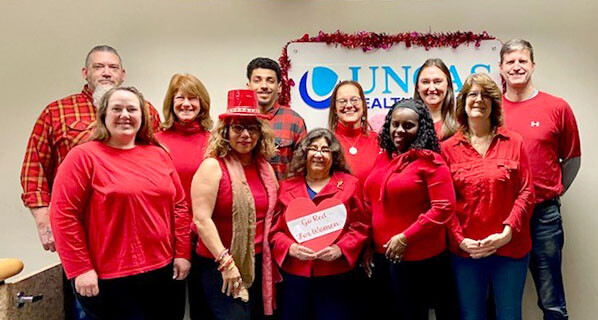
The Uncas Health District staff wore red, February 2, to show support for the Go Red for Women campaign. The Go Red for Women is a national movement to raise awareness and fund raise on heart disease and stroke in women. We encourage our communities to participate in CPR trainings - our mobile health team does CPR trainings in our communities. GO RED!

Recognizing the Team

Public health success is measured by what doesn’t happen—the outbreaks prevented, the injuries avoided, and the lives extended. This week, we acknowledge the inspectors, nurses, educators, and planners at the Uncas Health District who maintain these vital systems.

To our staff, partners, and volunteers: thank you for your technical expertise, your persistence, and your commitment to the well-being of Eastern Connecticut. Your work is the backbone of a healthier, more resilient community.