Flu Update: 90 New Cases Reported Last Week, Season Total Approaching 700

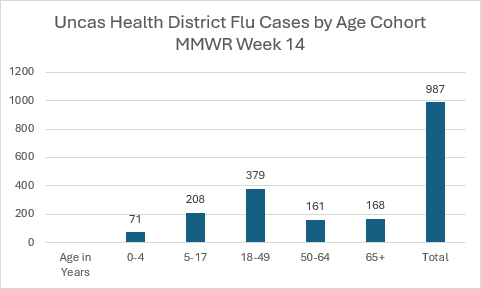
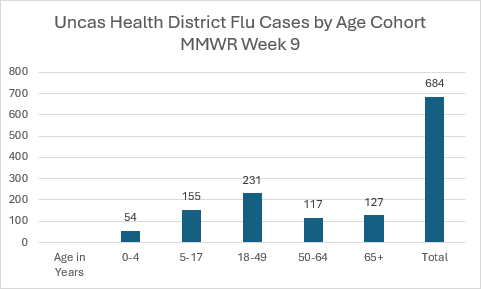
90 new influenza cases have been identified in the 11 cities and towns of the Uncas Health District this flu season, according to March 1, 2024, data from the Connecticut Department of Health. This week’s reported numbers bring the flu season total to 684 cases in the district.

Those aged 18-49 years old represent the largest group for positive flu cases, comprising 231 of the total cases reported, followed by 5-17-year-olds with 155 cases.

It is important to note that influenza cases are only reported if there is a hospitalization or if the positive test comes from a minor.

flu cases by age

Even though we are experiencing spring-like temperatures this week, flu season is far from over. It is important to remain cautious, and it’s not too late to receive your flu vaccine. Vaccination is the single most effective way to protect yourself and others from the flu. Talk to your doctor today about getting vaccinated – it’s still your best defense against influenza. Remember to:

  • Wash your hands frequently with soap and water, especially after being in public places or around sick people.
  • Cover your coughs and sneezes with a tissue or your elbow to prevent spreading germs.
  • Stay home if you’re feeling unwell to avoid making others sick.

Stay safe and healthy!


Leap into Happiness and Health: Uncas Health District’s Guide for Leap Day 

Little boy jumping over hurdles on running track

Leap Day, that extra day on February 29th, is a day to celebrate the unexpected! Why not use it as a springboard for launching a happier and healthier lifestyle? Here are some tips from Uncas Health District to help residents of Eastern Connecticut make the most of this special occasion:

Fuel Your Body:

  • Leap into a new recipe: Explore a local farm stand or farmers’ market for fresh, seasonal ingredients. Try a recipe bursting with fruits and vegetables, or experiment with a new protein source like lean fish or beans.
  • Pack a healthy picnic: Take advantage of the expected mild weather Leap Day and enjoy a delicious, nutritious lunch al fresco. Pack whole-wheat sandwiches, veggie wraps, fruit salad, and homemade trail mix for a satisfying and healthy feast.
  • Hydrate for happiness: Carry a reusable water bottle and sip throughout the day. Staying hydrated improves energy levels, cognitive function, and even mood!

Move Your Body:

  • Leap out and explore: Lace up your walking shoes and embark on a new adventure. Eastern Connecticut is full of scenic trails, parks, and historic sites to discover. Challenge yourself to a longer walk than usual, or try a new route.
  • Get active indoors: Invite friends and family for a fun game of indoor basketball, badminton, or jump rope. Even a dance party in your living room can be a great way to get your heart rate up and have a laugh.
  • Join a local fitness class: Many gyms and community centers offer free or discounted introductory classes on Leap Day. Try something new like Zumba, yoga, or Pilates to discover an activity you enjoy.

Nourish Your Mind:

  • Start a gratitude journal: Take a few minutes each day to write down three things you’re grateful for. This simple practice can boost your mood and improve overall well-being.
  • Connect with loved ones: Schedule a phone call, video chat, or in-person visit with friends and family. Social connection is essential for mental and emotional health.
  • Get lost in a good book: Dedicate some time to reading a book that inspires, educates, or simply brings you joy. Curling up with a good read can be a relaxing and rewarding escape.

Remember:

  • Small changes add up: Don’t feel pressured to overhaul your entire lifestyle at once. Start with small, sustainable changes that you can easily incorporate into your daily routine.
  • Find what works for you: There’s no one-size-fits-all approach to happiness and health. Experiment and discover what activities and practices make you feel your best.
  • Celebrate your progress: Acknowledge and celebrate your achievements, no matter how small. This will help you stay motivated and on track toward your goals.

Uncas Health District is committed to supporting the health and well-being of Eastern Connecticut residents. We encourage you to use Leap Day as a springboard for a happier and healthier you!

Bonus Tip: Share your Leap Day wellness activities on social media using #UncasHealthLeap and inspire others to join the movement!

Together, let’s make the Uncas Health District a healthier and happier place to live!


Flu Update: 27 New Cases Reported This Week (Feb. 17)

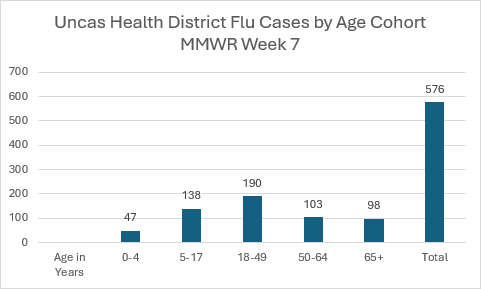
27 new influenza cases have been identified in the 11 cities and towns of the Uncas Health District this flu season, according to February 17, 2024, data from the Connecticut Department of Health. This week’s reported numbers bring the flu season total to 576 cases in the district.

Those aged 18-49 years old represent the largest group for positive flu cases, comprising 190 of the total cases reported, followed by 5-17-year-olds with 138 cases.

It is important to note that influenza cases are only reported if there is a hospitalization or if the positive test comes from a minor.

While the recent warm and sunny weather might feel like spring, eastern Connecticut is still very much in the thick of flu season. Flu activity is currently elevated and may continue to stay that way for several weeks.

So, don’t pack away those good habits just yet. Remember to:

  • Wash your hands frequently with soap and water, especially after being in public places or around sick people.
  • Cover your coughs and sneezes with a tissue or your elbow to prevent spreading germs.
  • Stay home if you’re feeling unwell to avoid making others sick.

And it’s not too late to get your flu shot. Vaccination is the single most effective way to protect yourself and others from the flu. Talk to your doctor today about getting vaccinated – it’s still your best defense against influenza.

Stay safe and healthy!

Shine Brighter in February: Celebrate International Boost Self-Esteem Month

man showing self esteem.

February isn’t just about roses and chocolates. It’s also International Boost Self-Esteem Month, a dedicated time to focus on the transformative power of feeling good about ourselves. So, let’s ditch the negativity and delve into why positive self-esteem matters and how we can cultivate it within ourselves and others.

Why is good self-esteem important?

Positive self-esteem isn’t about vanity or bragging. It’s about having a healthy internal perception of your worth and capabilities. This translates into numerous benefits, including:

Boosting your own self-esteem:

There are practical ways to nurture your self-worth. Here are some tips:

  • Practice self-compassion: Be kind to yourself, acknowledge your flaws, and celebrate your strengths.
  • Challenge negative self-talk: Replace critical thoughts with empowering affirmations.
  • Identify your values and live accordingly: Doing what matters to you strengthens self-esteem.
  • Celebrate your achievements, big and small: Recognize your progress and effort.
  • Embrace learning and growth: View mistakes as opportunities to improve.
  • Surround yourself with supportive people: Positive connections uplift and inspire you.

Helping others shine:

Let’s extend our self-esteem boost beyond ourselves! Here’s how you can support others:

  • Offer genuine compliments and encouragement: Focus on their strengths and positive qualities.
  • Actively listen without judgment: Create a safe space for them to share and be heard.
  • Celebrate their successes: Be genuinely excited about their achievements.
  • Offer constructive feedback: Focus on improvement, not criticism.
  • Model positive self-esteem: Your confidence can inspire others.

Remember, boosting self-esteem is a journey, not a destination. Be patient, celebrate progress, and don’t hesitate to seek professional support if needed. Let’s make this February a month of self-acceptance, inner strength, and radiant self-esteem for ourselves and everyone around us.

Read more about suicide prevention, intervention, and response


Flu Update: 58 New Cases Reported as Busy Flu Season Continues

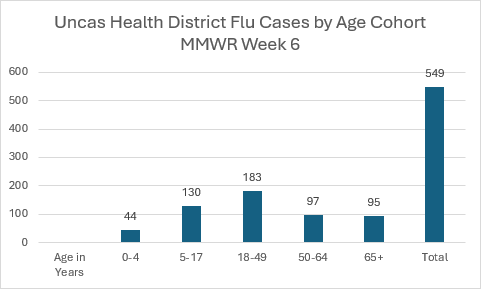
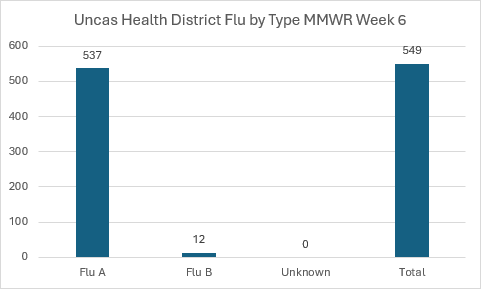
58 new influenza cases have been identified in the 11 cities and towns of the Uncas Health District this flu season, according to February 10, 2024, data from the Connecticut Department of Health. This week’s reported numbers bring the flu season total to 549 cases in the district.

Those aged 18-49 years old represent the largest group for positive flu cases, comprising 183 of the total cases reported, followed by 5-17-year-olds with 130 cases.

It is important to note that influenza cases are only reported if there is a hospitalization or if the positive test comes from a minor.

Flu Type 2-10-2024

While the recent warm and sunny weather might feel like spring, eastern Connecticut is still very much in the thick of flu season. Flu activity is currently elevated and may continue to stay that way for several weeks.

So, don’t pack away those good habits just yet. Remember to:

  • Wash your hands frequently with soap and water, especially after being in public places or around sick people.
  • Cover your coughs and sneezes with a tissue or your elbow to prevent spreading germs.
  • Stay home if you’re feeling unwell to avoid making others sick.

And it’s not too late to get your flu shot. Vaccination is the single most effective way to protect yourself and others from the flu. Talk to your doctor today about getting vaccinated – it’s still your best defense against influenza.

Stay safe and healthy!

Flu Update: Total Cases Approach 500 for Current Flu Season

flu update week 4

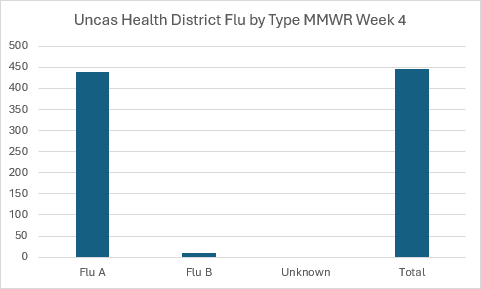
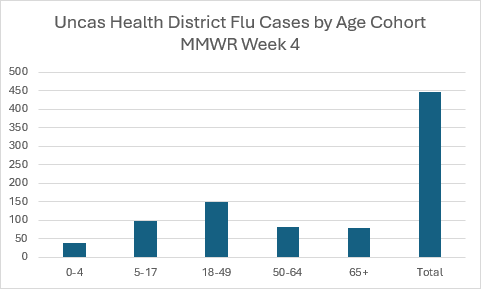
32 new influenza cases have been identified in the 11 cities and towns of the Uncas Health District this flu season, according to January 27, 2024, data from the Connecticut Department of Health. This week’s reported numbers bring the flu season total to 447 cases in the district.

Those aged 18-49 years old represent the largest group for positive flu cases, comprising 150 of the 447 total cases reported, followed by 5-17-year-olds with 99 cases.

It is important to note that influenza cases are only reported if there is a hospitalization or if the positive test comes from a minor.

flu cases - 1.27 flu cases week 4

The colder months bring an increased risk of influenza, but getting vaccinated now can safeguard your health. The flu vaccine is essential for protecting individuals from potentially severe complications, especially for high-risk groups like:

  • People 65 and older
  • Individuals with chronic health conditions (heart disease, lung disease, diabetes, asthma)
  • Pregnant women
  • Children under 5
  • Those caring for or living with high-risk individuals

Flu vaccines are safe, effective, and proven to prevent millions of illnesses, hundreds of thousands of hospitalizations, and thousands of deaths annually.

If you haven’t already, prioritize getting vaccinated, especially if you fall into a high-risk group. It’s not too late to protect yourself and others from the flu’s impact.

Vaccination is a proactive step towards a healthier community. Choose prevention and navigate the winter with greater resilience. Let’s work together to minimize the flu’s impact this season.

Get Your Flu Shot


January is National Cervical Cancer Awareness Month — What You Need to Know

woman with cervical cancer ribbon

January marks National Cervical Cancer Awareness Month. The American Cancer Society estimated there will have been about 13,960 new cases of invasive cancer diagnosed, and about 4,310 women will have died from cervical cancer in 2023. The 2020 CDC data for Connecticut shows there were 96 cases reported, equaling a cervical cancer rate of 4.8 per 100,000 women.

Anyone with a cervix is at risk for cervical cancer, increasing in people over the age of 30. Certain types of HPV are the main cause of cervical cancer. Screening tests and the HPV vaccine can help reduce the risk of cervical cancer. Click here to see more information about cervical cancer risk.

What is cervical cancer?

Cervical cancer starts in the cells lining the cervix — the lower part of the uterus (womb).

The cervix connects the body of the uterus (the upper part where a fetus grows) to the vagina (birth canal). Cancer starts when cells in the body begin to grow out of control.

The cervix is made of two parts and is covered with two different types of cells.

  • The endocervix is the opening of the cervix that leads into the uterus. It is covered with glandular cells.
  • The exocervix (or ectocervix) is the outer part of the cervix that can be seen by the doctor during a speculum exam. It is covered in squamous cells.

The place where these two cell types meet in the cervix is called the transformation zone. The exact location of the transformation zone changes as you get older and if you give birth. Most cervical cancers begin in the cells in the transformation zone.

Cervical Cancer Symptoms

Cervical cancer may not present with signs or symptoms in its early stages. Advanced cervical can cause bleeding or discharge from the vagina that is not normal for you. The best way to reduce risk is to see your doctor regularly, comply with screening recommendations, and report anything to your doctor that is not normal for you. See the attached documents for more detailed information.

Types of Treatment

If you are diagnosed with cervical cancer, you will be referred to a gynecologic oncologist to develop a treatment plan. Cervical cancer is treated in several ways. It depends on the kind of cervical cancer and how far it has spread. Treatments include surgery, chemotherapy, and radiation therapy.

  • Surgery: Doctors remove cancer tissue in an operation.
  • Chemotherapy: Using special medicines to shrink or kill the cancer. The drugs can be pills you take or medicines given in your veins, or sometimes both.
  • Radiation: Using high-energy rays (similar to X-rays) to kill the cancer.

 Insurance and Income: For those who are concerned they cannot afford care

Screening and treatment are covered under most insurance policies. But what if you, or someone you know, is uninsured or underinsured and cannot afford care? In Connecticut, the DPH has the Connecticut Early Detection & Prevention Program (CEDPP).

The CEDPP is an integrated program that brings breast and cervical cancer screening together with the WISEWOMAN, Colorectal Cancer, and Comprehensive Cancer programs, which helps promote healthy lifestyles for Connecticut Residents in order to decrease breast, cervical, and colorectal cancers, heart disease, hypertension, and other avoidable diseases. If you, or someone you know, needs to receive screening but cannot afford it, please go to the Early Detection and Prevention Program website to determine eligibility.

Cervical Cancer Facts


National Diabetes Month: Take Charge of Your Tomorrow

national diabetes month


November is National Diabetes Month, a time to raise awareness about diabetes and its prevention. Diabetes is a chronic disease that affects millions of people around the world. It occurs when the body is unable to properly produce or use insulin, a hormone that helps regulate blood sugar levels.

The theme of National Diabetes Month 2023 is “Take charge of tomorrow: Preventing diabetes health problems.” This theme emphasizes the importance of taking steps to prevent the complications of diabetes, such as heart disease, stroke, kidney disease, and blindness.

There are many things that people can do to prevent diabetes and its complications, including:

  • Eating a healthy diet: This means eating plenty of fruits, vegetables, and whole grains, and limiting processed foods, sugary drinks, and unhealthy fats.
  • Being physically active: Aim for at least 30 minutes of moderate-intensity exercise most days of the week.
  • Maintaining a healthy weight: Excess weight can increase the risk of developing diabetes.
  • Quitting smoking: Smoking damages the blood vessels and makes it harder for the body to control blood sugar levels.
  • Getting regular checkups: If you have prediabetes or diabetes, it is important to see your doctor regularly for checkups and screenings.

Here are some additional tips for preventing diabetes-related health problems:

  • Manage your blood sugar levels: This is the most important thing you can do to prevent diabetes complications. Work with your doctor to develop a blood sugar management plan that is right for you.
  • Get regular blood pressure checks: High blood pressure can damage the blood vessels and increase the risk of heart disease, stroke, and kidney disease. If you have high blood pressure, work with your doctor to lower it.
  • Control your cholesterol levels: High cholesterol levels can also damage the blood vessels and increase the risk of heart disease and stroke. Work with your doctor to keep your cholesterol levels in check.
  • See your doctor for regular eye exams: Diabetes can damage the blood vessels in the eyes and lead to blindness. Early detection and treatment can help prevent vision loss.
  • See your dentist for regular checkups and cleanings: People with diabetes are at increased risk for gum disease and tooth loss. Regular dental care can help keep your teeth and gums healthy.
  • National Diabetes Month is a time to take charge of your health and learn more about how to prevent diabetes and its complications. By following the tips above, you can reduce your risk of developing diabetes and its complications and live a long and healthy life.

American Diabetes Association Recognized Diabetes Education Programs in Connecticut

Connecticut-based insurance and Medicare Part B must cover diabetes education. Co-pays and deductibles apply. You’ll need a physician/qualified non-physician referral.

Sponsoring Organization: Yale New Haven Health System
Site/Program Name: Bridgeport Hospital
Address: 267 Grant Street, Bridgeport, CT, 06610
Phone: 203-384-4553
https://www.bridgeporthospital.org/
[email protected]


Sponsoring Organization: Bristol Hospital
Site/Program Name: Living Well with Diabetes-Education and Self-Management
Address: 102 North Street, Bristol, CT, 06010
Phone: 860-940-6300
http://www.bristolhospital.org/Services/Diabetes-Care/ADA-Recognition.aspx
[email protected]


Sponsoring Organization: Western Connecticut Health Network
Site/Program Name: The Diabetes Self-Management Program of Danbury Hospital
Address: 41 Germantown Road, Suite B03, Danbury, CT, 06810
Phone: 203-739-4980
http://www.danburyhospital.org/departments/diabetes-and-endocrinology-services-at-danbury-hospital
[email protected]


Sponsoring Organization: Griffin Faculty Physicians
Site/Program Name: Live Well Diabetes Self-Management Workshop
Address: 67 Maple St Derby, CT 06418
Phone: 203-732-1137
[email protected]
Note: Must be patient of Griffin Faculty Physicians, request referral from your provider


Sponsoring Organization: University of Connecticut Health Center
Site/Program Name: Diabetes Self-Management Education Program
Address: 263 Farmington Avenue, Farmington, CT, 06030
Phone: 860-679-3245
http://health.uconn.edu/diabetes/diabetes-self-management-education-program/


Sponsoring Organization: Yale New Haven Health System
Site/Program Name: Greenwich Hospital Center for Behavior & Nutritional Health
Address: 55 Holly Hill Lane, Greenwich, CT, 06830
Phone: 203-863-2939
https://www.greenwichhospital.org/services/diabetes-endocrinology.aspx
[email protected]

Sponsoring Organization: Saint Francis Hospital and Medical Center
Site/Program Name: Diabetes Care Center
Address: 114 Woodland Street, Hartford, CT, 06105
Phone: 860-714-4402
https://www.stfranciscare.org/diabetes/
[email protected]


Sponsoring Organization: Community Health Services, Inc.
Site/Program Name: Diabetes Self-Management Education Program
Address: 500 Albany Avenue, Hartford, CT, 06120
Phone: 860-249-9625 (Press 0)
www.chshartford.org/
Elaine Hamilton, RD, CDE

Sponsoring Organization:. Charter Oak Health Center
Site/Program Name: Diabetes Self-Management Education Program
Address: 21 Grand Ave, Hartford, CT, 06106
Phone: 860- 550-7500
www.thecharteroak.org
Diane Bussolini, RD, CDE


Sponsoring Organization: Hartford Hospital
Site/Program Name: Diabetes Life Care Center at Hartford Hospital
Address: 85 Seymour Street, Hartford, CT, 06102-5037
Phone: 860-972-3526
https://hartfordhospital.org/File%20Library/Services/Diabetes/group-class-outline-of-topics.pdf


Sponsoring Organization: Eastern Connecticut Health Network, Inc.
Site/Program Name: Manchester Memorial Hospital
Address: 71 Haynes Street, Manchester, CT, 06040
Phone: 860-647-6824
http://www.echn.org/Services/Diabetes.aspx


Sponsoring Organization: MidState Medical Center
Site/Program Name: Diabetes Self-Management & Nutrition Center
Address: 61 Pomeroy Avenue, Meriden, CT, 06450
Phone: 203-694-5425
https://www.midstatemedical.org/services_clinical_diabetes.aspx
[email protected]


Sponsoring Organization: Middlesex Hospital
Site/Program Name: Diabetes Self-Management Education Program
Address: 28 Crescent Street, Middletown, CT, 06457
Phone: 860-358-5421
https://middlesexhospital.org/our-services/hospital-services/diabetes


Sponsoring Organization: The Hospital of Central Connecticut
Site/Program Name: Diabetes Center
Address: 100 Grand Street, New Britain, CT, 06050
Phone: 860-224-5672
http://thocc.org/services/diabetes-endocrinology


Sponsoring Organization: Yale New Haven Health System
Site/Program Name: Hospital Outpatient Services
Address: 20 York Street, New Haven, CT, 06504
Phone: 203-688-2422
[email protected]


Sponsoring Organization: Lawrence & Memorial Hospital Medical Group
Site/Program Name: Joslin Diabetes Center affiliate at Lawrence & Memorial Hospital
Address: 194 Howard Street, New London, CT, 06320
Phone: 860-444-4737
http://www.joslin.org/ape/default.asp
[email protected]


Sponsoring Organization: New Milford Hospital
Site/Program Name: Diabetes Self-Management Education Program
Address: New Milford Hospital 21 Elm Street New Milford, CT, 06776
Phone: 860-210-5393
http://www.newmilfordhospital.org/departments/diabetes-endocrinology-and-nutrition-services-at-new-milford-hospital/diabetes-endocrinology-and-nutrition-services/nutrition-services-and-classes
[email protected]


Sponsoring Organization: Norwalk Hospital
Site/Program Name: Diabetes Self-Management Education Program
Address: 34 Maple Street, Norwalk, CT, 06856
Phone: 203-852-2181
http://www.norwalkhospital.org/departments/diabetes-and-endocrinology-services-at-norwalk-hospital


Sponsoring Organization: William W. Backus Hospital
Site/Program Name: Diabetes Self-Management Education Program
Address: 111 Salem Turnpike, Norwich, CT, 06360
Phone: 860-892-6906
https://backushospital.org/our-services/endocrinology/programs-classes/


Sponsoring Organization: Lawrence & Memorial Hospital Medical Group
Site/Program Name: Joslin Diabetes Center affiliate at Lawrence & Memorial Hospital
Address: 91 Voluntown Road, Stonington, CT, 06379
Phone: 860-444-3366
https://www.lmhospital.org/locations/stonington.aspx
[email protected]


Sponsoring Organization: The Stamford Hospital
Site/Program Name: Diabetes Self-Management Education Program
Address: 292 Long Ridge Rd., Stamford, CT, 06902
Phone: 203-276-7286
www.stamfordhealth.org
[email protected]


Sponsoring Organization: Charlotte Hungerford Hospital
Site/Program Name: Hungerford Diabetes Center
Address: 780 Litchfield Street, Torrington, CT, 06790
Phone: 860-489-0661, Ext. 4
http://www.charlottehungerford.org
[email protected]


Sponsoring Organization: VA Healthcare System/VA Connecticut
Site/Program Name: Diabetes Self-Management Education Program
Address: 950 Campbell Avenue West Haven, CT, 06516
Phone: 203-932-5711 Ext. 5189
www.connecticutva.gov
[email protected]


Sponsoring Organization: Windham Community Memorial Hospital and Hatch Hospital Corporation
Site/Program Name: Windham Community Hospital Diabetes Education Program
Address: 112 Mansfield Avenue Willimantic, CT, 06226
Phone: 860-456-6727
www.windhamhospital.org
[email protected]