FDA approves new COVID-19 vaccines that target circulating variants

Covid-19 vaccine and syringe

On September 11, 2023,  the U.S. Food and Drug Administration (FDA) took action approving and authorizing for emergency use updated COVID-19 vaccines formulated to more closely target currently circulating variants and to provide better protection against serious consequences of COVID-19, including hospitalization and death. Today’s actions relate to updated mRNA vaccines for 2023-2024 manufactured by ModernaTX Inc. and Pfizer Inc. Consistent with the totality of the evidence and input from the FDA’s expert advisors, these vaccines have been updated to include a monovalent (single) component that corresponds to the Omicron variant XBB.1.5.

What You Need to Know

  • Individuals 5 years of age and older regardless of previous vaccination are eligible to receive a single dose of an updated mRNA COVID-19 vaccine at least 2 months since the last dose of any COVID-19 vaccine.
  • Individuals 6 months through 4 years of age who have previously been vaccinated against COVID-19 are eligible to receive one or two doses of an updated mRNA COVID-19 vaccine (timing and number of doses to administer depends on the previous COVID-19 vaccine received).
  • Unvaccinated individuals 6 months through 4 years of age are eligible to receive three doses of the updated authorized Pfizer-BioNTech COVID-19 Vaccine or two doses of the updated authorized Moderna COVID-19 Vaccine.
  • The FDA is confident in the safety and effectiveness of these updated vaccines and the agency’s benefit-risk assessment demonstrates that the benefits of these vaccines for individuals 6 months of age and older outweigh their risks.
  • Individuals who receive an updated mRNA COVID-19 vaccine may experience similar side effects as those reported by individuals who previously received mRNA COVID-19 vaccines as described in the respective prescribing information or fact sheets.
  • The updated vaccines are expected to provide good protection against COVID-19 from the currently circulating variants. Barring the emergence of a markedly more virulent variant, the FDA anticipates that the composition of COVID-19 vaccines may need to be updated annually, as is done for the seasonal influenza vaccine.
  • The U.S. Centers for Disease Control and Prevention’s Advisory Committee on Immunization Practices will meet tomorrow (Sept. 12), to discuss clinical recommendations on who should receive an updated vaccine, as well as further considerations for specific populations such as immunocompromised and older individuals.
  • Manufacturers have publicly announced that the updated vaccines would be ready this fall, and the FDA anticipates that the updated vaccines will be available in the near future.
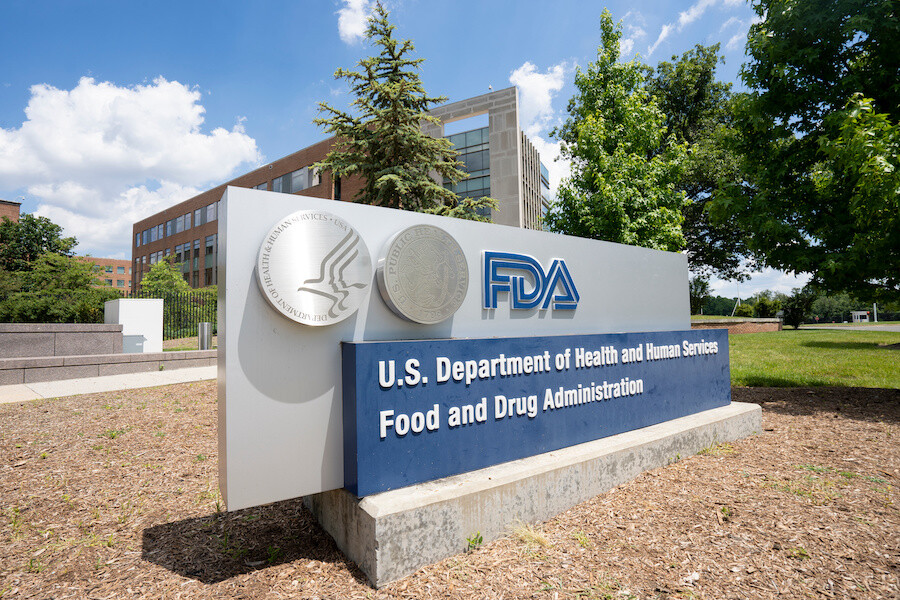
FDA headquarters in Maryland

“Vaccination remains critical to public health and continued protection against serious consequences of COVID-19, including hospitalization and death,” said Peter Marks, M.D., Ph.D., director of the FDA’s Center for Biologics Evaluation and Research. “The public can be assured that these updated vaccines have met the agency’s rigorous scientific standards for safety, effectiveness, and manufacturing quality. We very much encourage those who are eligible to consider getting vaccinated.”

The updated mRNA vaccines are each approved for individuals 12 years of age and older and are authorized under emergency use for individuals 6 months through 11 years of age. As part of today’s actions, the bivalent Moderna and Pfizer-BioNTech COVID-19 vaccines are no longer authorized for use in the United States.

Data Supporting the Updated mRNA COVID-19 Vaccines (2023-2024 Formula)

The mRNA COVID-19 vaccines approved and authorized today are supported by the FDA’s evaluation of manufacturing data to support the change to the 2023-2024 formula and non-clinical immune response data on the updated formulations including the XBB.1.5 component.

  • The updated mRNA vaccines are manufactured using a similar process as previous formulations. In studies that have been recently conducted, the extent of neutralization observed by the updated vaccines against currently circulating viral variants causing COVID-19, including EG.5 and BA.2.86, appears to be of a similar magnitude to the extent of neutralization observed with prior versions of the vaccines against corresponding prior variants against which they had been developed to provide protection. This suggests that the vaccines are a good match for protecting against the currently circulating COVID-19 variants.
  • The benefit-risk profile of previously authorized and approved mRNA COVID-19 vaccines is well understood as these vaccines have been administered to hundreds of millions of people in the United States.

Based on an evaluation of the totality of the evidence, the benefit-risk profile is favorable for individuals 6 months of age and older to receive an updated COVID-19 mRNA vaccine. Although serious outcomes from COVID-19 are less common in younger individuals, they do occur, and it has been demonstrated that recently receiving a COVID-19 vaccine reduces the risk of such serious outcomes.

Additional Details on Today’s Actions

Specifically, today’s actions include:

  • Approval of Comirnaty (COVID-19 Vaccine, mRNA) to include the 2023-2024 formula, and a change to a single dose for individuals 12 years of age and older. Comirnaty was previously approved as a two-dose series for individuals 12 years of age and older.
  • Approval of Spikevax (COVID-19 Vaccine, mRNA) to include the 2023-2024 formula, a change to a single dose for individuals 18 years of age and older, and approval of a single dose for individuals 12 through 17 years of age. Spikevax was previously approved as a two-dose series for individuals 18 years of age and older.
  • Authorization of Moderna COVID-19 Vaccine for emergency use in individuals 6 months through 11 years of age to include the 2023-2024 formula and lower the age eligibility for receipt of a single dose from 6 years to 5 years of age. Additional doses are also authorized for certain immunocompromised individuals ages 6 months through 11 years, as described in the fact sheets.
  • Authorization of Pfizer-BioNTech COVID-19 Vaccine for emergency use in individuals 6 months through 11 years of age to include the 2023-2024 formula. Additional doses are also authorized for certain immunocompromised individuals ages 6 months through 11 years, as described in the fact sheets.

The approval of Comirnaty (COVID-19 Vaccine, mRNA) (2023-2024 Formula) was granted to BioNTech Manufacturing GmbH. The EUA amendment for the Pfizer-BioNTech COVID-19 Vaccine (2023-2024 Formula) was issued to Pfizer Inc.

The approval of Spikevax (COVID-19 Vaccine, mRNA) (2023-2024 Formula) was granted to ModernaTX Inc. and the EUA amendment for the Moderna COVID-19 Vaccine (2023-2024 Formula) was issued to ModernaTX Inc.


Norwich Cooling Center to open for forecasted extreme heat September 5-7

heat advisory

With temperatures expected to reach the low 90s this week, the Norwich Cooling Center at the Rose City Senior Center will be open 5:30 a.m. until 4:00 p.m. on Tuesday, Sept. 5, Wednesday, Sept. 6, and Thursday, Sept. 7. The cooling center, located at 8 Mahan Drive in Norwich, has a capacity of 200.

Additionally, the Connecticut Department of Health has issued a reminder to all state residents to be very cautious when outside and to make sure they remain cool and hydrated.

From the DPH:

With temperatures anticipated to rise close to or into the low 90s this week, Connecticut Department of Public Health Commissioner Manisha Juthani, MD, is reminding individuals who will be spending time outside or in non-air-conditioned spaces to be cautious during periods of intense heat during the day.

The current forecast indicates that temperatures over this period will rise close to or into the low 90s, and the heat index is expected to reach into the mid-90s in certain inland areas of the state. On Monday, Governor Ned Lamont announced that he is directing Connecticut’s extreme hot weather protocol to be activated effective at noon on Tuesday, Sept. 5, and remaining in effect through 8 pm. on Thursday, Sept. 7.

“While Labor Day signals the unofficial end of summer, that doesn’t mean that we won’t continue to see high temperatures that will feel very hot and humid,” said Commissioner Juthani. “During this heat wave, residents should stay hydrated, take frequent breaks in cooler air-conditioned/shaded areas, and limit the time spent in direct sun. Additionally, more physical tasks should take place in the morning or evening, when the sun is less intense, and temperatures are cooler.”

Commissioner Juthani added that those who are experiencing heat stress should call for medical assistance immediately. Although anyone can be affected by heat-stress, those working outside are at a particularly high risk including:

  • Older individuals (over 65 years of age) who may not compensate for heat stress efficiently and are less likely to sense and respond to changes in temperature
  • Those performing frequent high-exertion tasks (lifting, digging, walking) who may become dehydrated quickly and experience more intense heat stress
  • Those who have underlying health conditions, especially heart disease, obesity, high blood pressure, diabetes, or who take certain medications that put them at risk

 Follow the steps below to stay cool and hydrated while working in the heat:

 Stay Cool

Keep your body temperature cool to avoid heat-related illness.

  • Stay in air-conditioned buildings as much as possible. If you must work outdoors, try to limit your outdoor activity to the mornings and evenings.
  • Avoid working in direct sunlight and wear lightweight, light-colored, and moisture-wicking clothing.
  • Check on family members, especially those most at risk often.
  • If you feel ill working in the heat, notify a family member and stop working.

Stay Hydrated

Because your body loses fluids through sweat, you can become dehydrated during times of extreme heat.

  • Drink more water than usual; do not wait until you are thirsty to drink more liquids.
  • Avoid drinking alcoholic beverages.
  • Drink about four cups of water every hour while working outside.
  • Remind others to drink enough water.


For more information about steps that employers and workers can take to reduce the risk of heat-related illness, contact the Connecticut Department of Public Health’s Occupational Health Program at (860) 509-7740 or email [email protected].

CT DEEP warns of algae bloom at Avery Pond in Preston

man scooping algae with a plastic cup

On Wednesday, August 16, 2023, the Connecticut Department of Energy and Environmental Protection (CT DEEP) notified the Uncas Health District of an algae bloom at Avery Pond.

Avery Pond is a natural water body located in the Town of Preston.

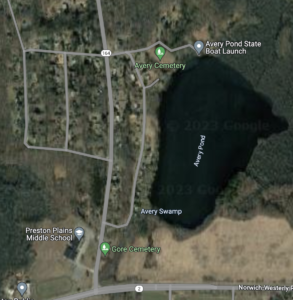
Avery Pond in Preston

Avery Pond is near the intersection of Route 2 and Route 164 in Preston

The pond has a state-owned boat launch located on the northern shore.

The state is recommending people be alert and avoid skin contact with water that:

  • Looks like spilled paint;
  • Has surface scums, mats, or films;
  • Is discolored or has colored streaks like green, blue, red, or brown;
  • Has green globs floating below the surface.

Families should keep children and pets away from the algae blooms and rinse off any exposed skin or animal fur with clean water.

For more information, please visit the Connecticut Department of Public Health webpage on Blue-Green Algae Blooms or the CT DEEP webpage.


DPH warns residents about severe Vibrio infections caused by consumption of raw shellfish or exposure to salt or brackish water

The Connecticut Department of Public Health (DPH) is warning residents about the potential dangers of consuming raw shellfish and exposure to salt or brackish water along Long Island Sound, due to severe Vibrio vulnificus infections.

Since July 1, three cases of V. vulnificus infections have been reported to DPH. The three patients are between 60-80 years of age. All three patients were hospitalized and one died.  One patient reported consuming raw oysters from an out-of-state establishment. Two patients reported exposure to salt or brackish water in Long Island Sound. Both patients had pre-existing open cuts or wounds or sustained new wounds during these activities which likely led to the infections. 

“The identification of these severe cases, including one fatality, due to V. vulnificus is concerning,” said DPH Commissioner Manisha Juthani, MD. “People should consider the potential risk of consuming raw oysters and exposure to salt or brackish water and take appropriate precautions. Particularly during the hottest months of the summer, bacteria are more likely to overgrow and contaminate raw shellfish. Given our current heat wave, this may be a time to exercise particular caution in what you consume.”

V. vulnificus infection is an extremely rare illness. Five cases were reported in 2020 in Connecticut, and none in 2021 and 2022. V. vulnificus infections from oysters can result in severe illness, including bloodstream infections.  V. vulnificus can also cause wound infections when open wounds are exposed to warm salt or brackish water (mix of salt and fresh water).  People with a V. vulnificus infection can get seriously ill and need intensive care or limb amputation. About one in five people with this type of infection die. People at greatest risk for illness from V. vulnificus are those with weakened immune systems and the elderly.

 You can reduce your chance of getting this type of infection by following these precautions:

  • Don’t eat raw or undercooked oysters or other shellfish. 
  • If you have a wound (including from a recent surgery, piercing, or tattoo), stay out of saltwater or brackish water, if possible. This includes wading at the beach.
  • Cover your wound with a waterproof bandage if it could come into contact with saltwater, brackish water, marine life, or raw or undercooked seafood and its juices. This contact can happen during everyday activities, such as swimming, fishing, or walking on the beach.
  • Wash wounds and cuts thoroughly with soap and water after they have contact with saltwater, brackish water, marine life, raw seafood, or its juices.

 For more information on V. vulnificus infections, visit https://www.cdc.gov/vibrio/wounds.html 


From the CT State Department of Public Health