Pesticides can help control insects, weeds, rodents, and other unwanted pests, but they must be handled carefully. Common household products—including insect sprays, weed killers, rodent baits, and flea-and-tick treatments—can cause harm when they are used incorrectly, stored improperly, or left where children and animals can reach them.
Following the product label and taking a few basic precautions can reduce the risk of accidental exposure while helping the pesticide work as intended.
Read the Label Before Every Use
The pesticide label provides important instructions for using the product safely and effectively. Even if you have used a similar product before, read the entire label because ingredients, concentrations, application methods, and precautions may differ.
The label explains:
- Where and how the product may be used
- How much product to apply
- What protective clothing or equipment may be needed
- How long should children and pets remain away from a treated area
- How to store and dispose of the product
- What first-aid steps to take after an exposure
The U.S. Environmental Protection Agency emphasizes that reading the label is the first step toward choosing and using pesticides safely. Applying more pesticide than recommended does not make the product more effective. It can increase health risks, damage plants or property, and allow chemicals to spread beyond the intended area.
Never mix pesticide products unless the label specifically instructs you to do so.
Keep Children Away from Pesticides
Children may be more likely to come into contact with pesticides because they frequently play on floors, lawns, and other treated surfaces and often place their hands or objects in their mouths.
Before applying a pesticide indoors or outdoors:
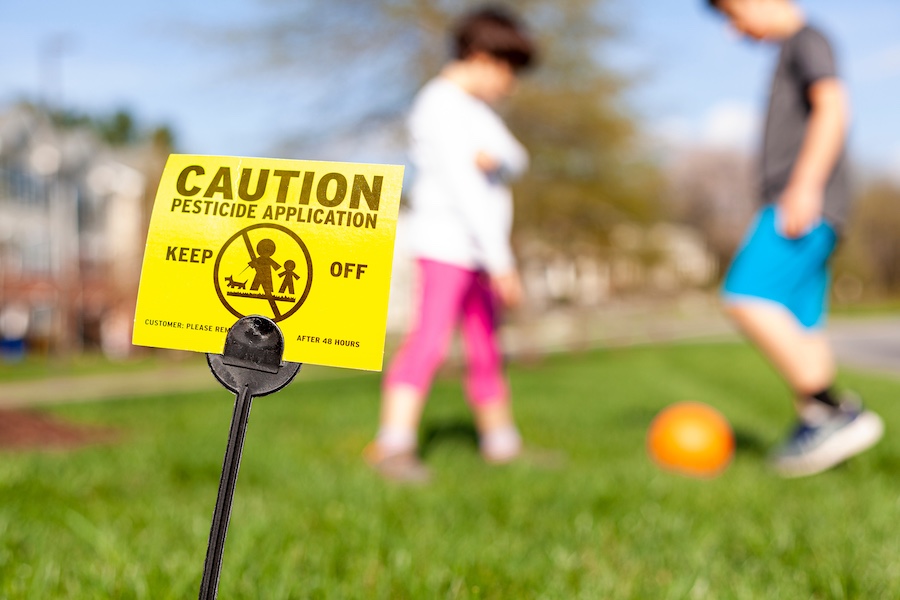
- Remove children, toys, bottles, and play equipment from the area.
- Cover or put away food, dishes, and cooking utensils.
- Keep children away for the amount of time specified on the label.
- Make sure treated surfaces are fully dry before allowing children to return.
- Have children wash their hands after playing outdoors and before eating.
Pesticides should never be left unattended while open or in use. If you are interrupted, close the container and return it to a secure location. The EPA provides additional guidance on how to reduce a child’s chances of pesticide poisoning.
Rodent, ant, and slug baits should be placed only in locations permitted by the label and where children cannot access them. When possible, use secured or tamper-resistant bait stations.
Protect Pets During and After Application
Pets can be exposed to pesticides by walking across treated surfaces, licking their paws, eating bait, drinking contaminated water or coming into contact with pesticide containers.
Remove pets, food bowls, water bowls, bedding, and toys before treating an area. Keep animals away until the pesticide has dried or for the full amount of time stated on the label. The National Pesticide Information Center offers additional advice for protecting pets when using pesticides in and around the home.
Pet owners should also use flea-and-tick products carefully. A product labeled for one type of animal may be dangerous to another. Never use a product intended for dogs on a cat unless the label specifically states that it is safe. Choose a product intended for the animal’s species, age, and weight, and apply only the recommended amount. Review the EPA’s guidance on safely controlling fleas and ticks on pets, and consult a veterinarian with questions.
Store Pesticides Securely
Safe storage is one of the most effective ways to prevent accidental poisoning. Store pesticides:
- In their original, labeled containers
- Tightly closed after every use
- In a locked cabinet, shed, or storage area
- Out of the sight and reach of children and pets
- Away from food, drinks, animal feed, and medications
- Away from heat, flames, moisture and freezing temperatures
Never transfer a pesticide into a cup, water bottle, food container, or unmarked spray bottle. Someone could mistake it for something safe to eat or drink, and the product’s instructions, ingredients, and first-aid information would no longer be available.
Purchase only the amount you expect to use so that unnecessary chemicals do not accumulate in your home. More information is available through the EPA’s guide to storing pesticides safely.
Use Prevention as the First Line of Defense
Not every pest problem requires a chemical treatment. Integrated pest management focuses first on removing the food, water and shelter that attract pests.
Preventive measures include:
- Sealing cracks and openings
- Repairing damaged window and door screens
- Fixing plumbing leaks
- Storing food in sealed containers
- Cleaning up crumbs and spills
- Removing standing water
- Keeping trash containers securely covered
- Maintaining lawns and vegetation around the home
When pesticide use is still necessary, select a product specifically labeled for the pest and location involved. The EPA’s integrated pest management principles explain how prevention and targeted treatment can reduce unnecessary pesticide use.
Dispose of Pesticides Properly
Never pour leftover pesticides down a sink, into a toilet, into a storm drain, or onto the ground. Follow all disposal instructions on the product label.
Connecticut residents may be able to bring unwanted household pesticides to a local household hazardous waste collection. The Connecticut Department of Energy and Environmental Protection provides information about household hazardous waste programs and collection options.
Additional instructions are available in the EPA’s guide to the safe disposal of pesticides.
Know What to Do After an Exposure
If a pesticide is swallowed, inhaled, spilled on the skin or splashed into the eyes, check the product label immediately for first-aid instructions. Do not induce vomiting unless the label or a medical professional instructs you to do so.
Contact Poison Control online or by calling 1-800-222-1222 for free, confidential guidance. Call 911 immediately if the person is unconscious, having a seizure or experiencing difficulty breathing.
Keep the pesticide container or label nearby so you can provide the product name, ingredients, and EPA registration number. For a possible pet exposure, contact a veterinarian or emergency veterinary clinic promptly.
Pesticides should always be treated as potentially hazardous household products. Reading the label, storing products securely, and keeping children and pets away from treated areas can help prevent avoidable exposures.