
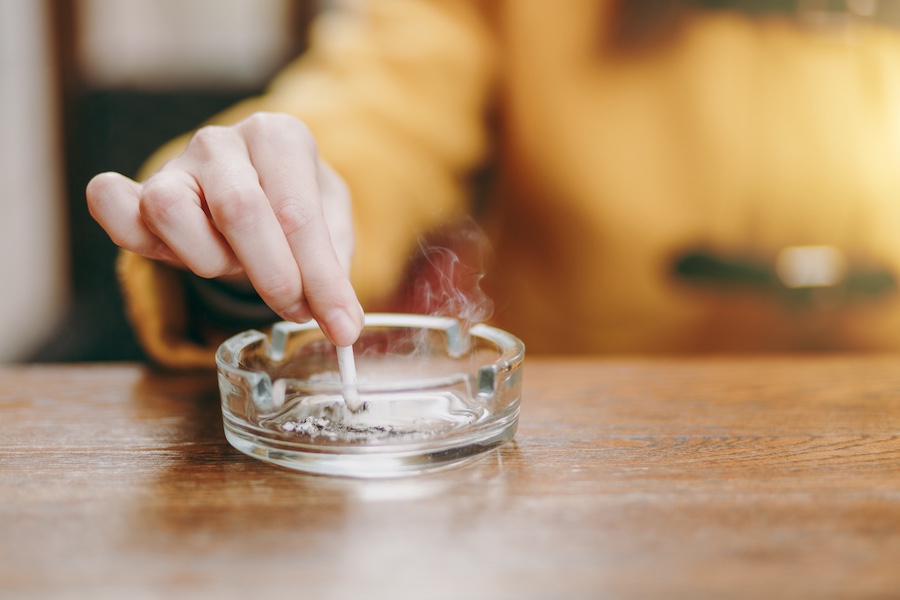
Quitting tobacco rarely happens all at once. For most people, it takes a plan, some support, and often more than one try. The Great American Smokeout on Thursday, Nov. 19, is a good place to start.
The American Cancer Society holds the Smokeout on the third Thursday of November each year, and 2026 marks its 50th year. The idea is simple. Pick one day to go without smoking, or use that day to build a plan to quit. The same goes for cigars, vapes, and other nicotine products.
Your Body Starts Recovering Fast
The benefits of quitting begin within minutes and keep adding up for years. According to the American Cancer Society:
- About 20 minutes after your last cigarette, your heart rate and blood pressure come down.
- Within a few days, the carbon monoxide level in your blood returns to normal.
- Over the next two weeks to three months, your circulation and lung function improve.
- Within the first year, coughing and shortness of breath ease as your lungs get better at clearing themselves.
- After one to two years, your risk of heart attack drops sharply.
- After five to 10 years, your risk of cancers of the mouth, throat, and voice box is cut in half, and your stroke risk goes down.
- After 10 to 15 years, your risk of lung cancer is about half that of someone who still smokes.
- After 15 years, your risk of heart disease is close to that of a nonsmoker.
- Quitting can add as many as 10 years to your life. It is never too late to stop, though earlier is better. People who quit before age 40 lower their risk of dying from a smoking-related disease by about 90%.
Some rewards show up right away. Food tastes better, and the money you spent on tobacco stays in your pocket.
You Don't Have to Do It Alone
Willpower matters, but support makes a real difference. The Connecticut Department of Public Health notes that counseling combined with FDA-approved medication can double a person's chances of quitting successfully.
Every Connecticut resident can get free help through the Connecticut Quitline, which is open 24 hours a day, seven days a week. It covers cigarettes and other commercial tobacco, including e-cigarettes. Services include:
- A trained coach to help you build a plan
- Free nicotine replacement, such as patches, gum, or lozenges, for eligible adults
- Text, email, and online chat support: Call 1-800-QUIT-NOW (1-800-784-8669) or visit CommitToQuitCT.com to enroll. Spanish speakers can call 1-855-DEJELO-YA. The TTY line is 1-877-777-6534.
The American Cancer Society also offers support any time of day at 1-800-227-2345, along with quit tools at cancer.org/smokeout.
Make a Plan for Nov. 19
A little preparation goes a long way. Before your quit day:
- Choose your date. Nov. 19 works well, or pick a day in the next few weeks and circle it on the calendar.
- Tell family, friends, and co-workers so they can back you up.
- Clear cigarettes, lighters, ashtrays, and vape supplies out of your home, car, and workspace.
- Think about your triggers, such as morning coffee, driving or stress, and decide what you will do instead.
- Ask your doctor or pharmacist which medications might help.
If you slip, don't give up. Many people make several attempts before they quit for good. Each try teaches you something about what works for you.
How to Support Someone Who is Quitting
If someone you care about is quitting, ask what kind of help they want. Some people want check-ins, while others just want space. Keep your home and car smoke-free, be patient with irritability in the first few weeks, and celebrate their milestones along the way.