
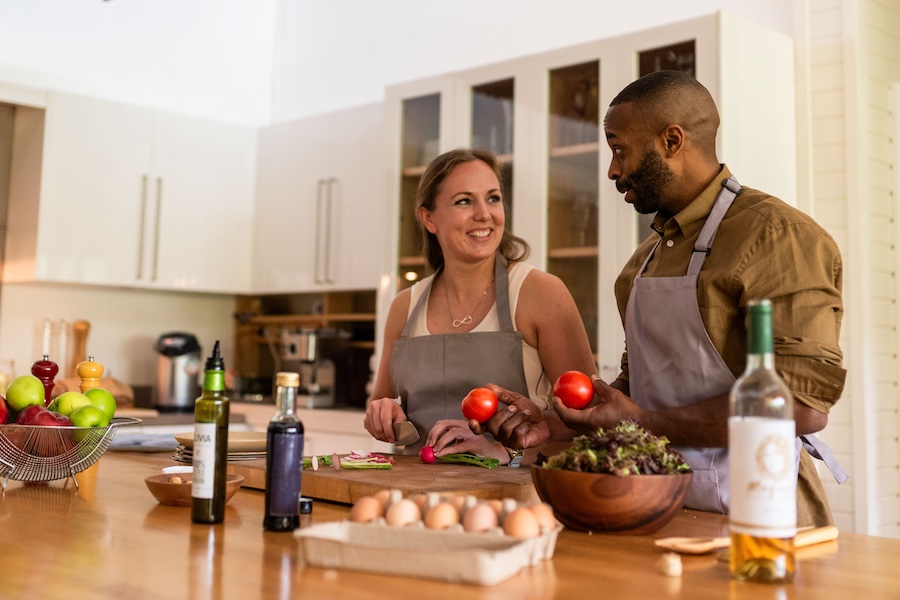
Food safety starts well before a meal reaches the table. How you handle ingredients, clean your workspace, cook food, and store leftovers all affect the risk of foodborne illness.
ServSafe®, the National Restaurant Association’s food safety training program, teaches food handlers about personal hygiene, cross-contamination, allergens, temperature control, and cleaning. Those same principles are useful at home. Uncas Health District encourages residents to put them into practice when preparing everyday meals or cooking for a crowd. Learn more about the ServSafe Food Handler program.
Start with Clean Hands and Equipment
Wash your hands with soap and water for at least 20 seconds before preparing food and after handling raw meat, using the bathroom, touching pets, or handling garbage.
Wash utensils, cutting boards, and countertops with hot, soapy water after each use, especially after contact with raw meat, poultry, seafood, or eggs. Rinse produce under running water, but do not wash raw chicken or other meat: splashing water can spread germs around the kitchen. These habits are part of FoodSafety.gov’s four steps to food safety.
Keep Raw Foods Separate
Cross-contamination happens when harmful germs move from one food or surface to another. Using a knife to cut raw chicken and then chop salad vegetables without washing it can transfer those germs to food that will not be cooked.
Use separate cutting boards for raw meat and ready-to-eat foods. Keep raw meat in sealed, leakproof containers, and always put cooked food on a clean plate. See FoodSafety.gov’s guidance on preventing cross-contamination.
Use a Thermometer to Check Doneness
Browning, clear juices, and cooking time cannot reliably confirm that food is safe. Use a food thermometer in the thickest part, avoiding bone.
For home cooking, follow these federal minimum internal temperature recommendations:
| Food | Safe internal temperature |
|---|---|
| Chicken, turkey, and ground poultry | 165°F |
| Ground beef, pork, and lamb | 160°F |
| Whole cuts of beef, pork, veal, and lamb | 145°F, followed by a three-minute rest |
| Fish | 145°F |
| Egg dishes | 160°F |
| Casseroles and reheated leftovers | 165°F |
These are household recommendations; commercial food service training includes additional time-and-temperature requirements.
Refrigerate Promptly and Plan for Leftovers
Keep your refrigerator at 40°F or below. Refrigerate perishable food within two hours, or within one hour when temperatures exceed 90°F. Thaw food in the refrigerator, never on the counter. Read more about safe refrigeration and thawing.
Do not leave a pot of soup or a casserole on the counter until it reaches room temperature. Divide large quantities into shallow containers and refrigerate promptly to speed cooling. Label leftovers with the preparation date, use refrigerated leftovers within three to four days, or freeze them for later. Reheat to 165°F. The USDA’s leftovers guide explains safe cooling, storage, and reheating.
Take Food Allergies Seriously
Allergen cross-contact occurs when an allergen transfers to another food through shared utensils, hands, surfaces, or ingredients. Even a small amount can cause a reaction, and cooking does not remove food allergens.
Ask guests about allergies before planning a meal, check ingredient labels, and use thoroughly washed equipment and separate serving utensils. Removing an allergen from a finished dish does not make it safe. Food Allergy Research & Education offers practical guidance for preventing cross-contact.
Step Away from Food Preparation When Sick
If you have vomiting or diarrhea, do not prepare food for others. Wait at least 48 hours after symptoms stop before resuming. Hand sanitizer does not replace handwashing, particularly when preventing norovirus. Follow the CDC’s norovirus prevention guidance.