
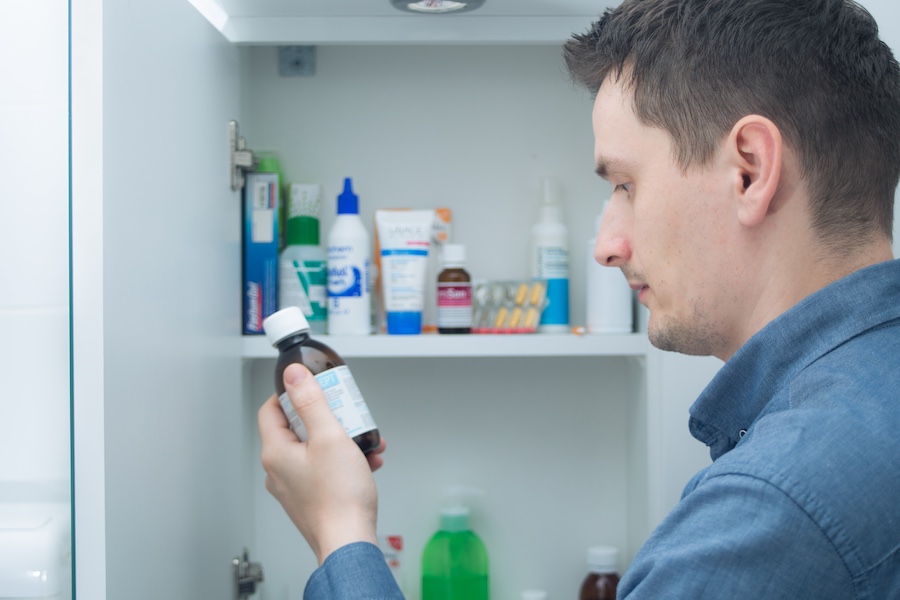
Prescription and over-the-counter medications can help people manage health conditions, relieve symptoms, and recover from illness. However, medications that are stored improperly or kept after they are no longer needed can create serious risks—including accidental poisoning, medication errors, misuse, and overdose.
Regularly reviewing your medications, securing those you still need, and safely disposing of those you no longer need can help protect children, teens, older adults, visitors, and pets.
Keep Medications Secure
All medications should be stored out of sight and reach of children. Whenever possible, keep prescription drugs, over-the-counter medications, vitamins, and supplements in a locked cabinet, box, or drawer. This is particularly important for opioids, sedatives, sleep medications, and other drugs that can cause severe harm when taken by someone for whom they were not prescribed.
The Centers for Disease Control and Prevention(opens in new tab) recommends putting medications away after every use—even when another dose will be needed later. Avoid leaving medicine on counters, nightstands, or tables, and remember that medications may also be found in purses, backpacks, coat pockets, and luggage.
Child-resistant packaging provides an added layer of protection, but it is not childproof. Close each container securely after use and store it in a location children cannot see or reach.
Always Use the Original, Labeled Container
Never store medications in unlabeled bottles, plastic bags, cups, or food containers. Without the original label, it can be difficult to identify the drug, dosage, expiration date, or person for whom it was prescribed. This increases the risk of taking the wrong medication or receiving an incorrect dose.
Keep medications in their original, child-resistant containers whenever possible. If you use a pill organizer, fill it carefully and keep both the organizer and the original prescription bottles in a secure location. Many pill organizers are not child-resistant and can be opened easily.
Never combine different medications in one prescription bottle, and do not share prescription drugs with another person—even if that person has similar symptoms.
Safely Dispose of Unused or Expired Medications
Do not keep medications that are expired, no longer needed, or no longer prescribed. Removing them from the home reduces the chance of accidental ingestion, medication errors, and misuse.
The safest option for most medications is an authorized drug take-back location. Connecticut residents can use the state’s local drug collection box directory(opens in new tab) or the DEA’s year-round drug disposal locator(opens in new tab) to find a participating police department, pharmacy, or other authorized collection site.
Before using a collection box, check its rules. Many locations accept prescription and over-the-counter pills, capsules, and patches, but may not accept needles, inhalers, thermometers, or certain liquids.
Consider a Medication Disposal Pouch
Medication disposal pouches offer another option when a take-back location is not readily available. These pouches generally contain materials that deactivate medications when water is added. Once used according to the manufacturer’s directions, the sealed pouch can typically be placed in household trash.
Follow all instructions printed on the pouch, including limits on the types and quantities of medications it can hold. Do not use a disposal pouch for needles, syringes, inhalers, or other products unless the manufacturer specifically states that they are accepted.
When Other Disposal Options Are Unavailable
If you cannot reach a take-back location or use a disposal pouch, follow the FDA’s instructions for disposing of medicine in household trash(opens in new tab):
- Remove the medication from its original container.
- Mix it with something undesirable, such as used coffee grounds, dirt, or cat litter. Do not crush tablets or capsules.
- Place the mixture in a sealed bag or container.
- Put the sealed container in your household trash.
- Remove or scratch out personal information from the empty medication packaging before discarding it.
Do not flush medications down a toilet or sink unless the label specifically directs you to do so or the medication appears on the FDA flush list(opens in new tab). The flush list applies to a limited number of especially dangerous medications when a take-back option is not readily available.
What to Do After an Accidental Ingestion
If you believe a child or adult may have taken the wrong medication—or too much medication—do not wait for symptoms to appear. Immediately call Poison Control at 1-800-222-1222 or use this online tool(opens in new tab). Help is free, confidential, and available 24 hours a day.
Do not induce vomiting or give the person food, milk, water, or another substance unless a poison specialist or healthcare professional tells you to do so. Keep the medication container nearby so you can provide the drug name, strength, and other label information.
Call 911 immediately if the person:
- Collapses or cannot be awakened
- Has trouble breathing
- Experiences a seizure
- Shows signs of a suspected opioid overdose
If opioid exposure is suspected and naloxone is available, administer it according to its instructions and call 911. Stay with the person until emergency assistance arrives.
Make Medication Safety Part of Your Routine
Set aside time several times each year to review household medications. Check expiration dates, remove drugs that are no longer needed, and confirm that everything is properly labeled and securely stored.
A few simple habits — locking medications away, keeping them in their original containers, and disposing of unused drugs promptly—can prevent medication errors, accidental poisoning, and misuse.